Author: Gaurav Pareek

  • 9 Best Social Media Sentiment Analysis Tools in 2026

    9 Best Social Media Sentiment Analysis Tools in 2026

    In the current digital world that is twenty-four hours a day, brands are evaluated on the spot. The perception of the whole society can be formed after one tweet, Reddit post, or viral Instagram post. This is why social media sentiment analysis tools have become imperative to the marketing, PR, and brand teams.

    Such tools are not limited to mentions counts. They not only examine the sentiments that people have towards your brand (are they positive, negative, or neutral) but also identify trends, risks and opportunities lurking within online conversations.

    The following list is a well-selected list of the best social media sentiment analysis tools with features, strengths, and a situation where they are most apt to assist you in selecting the correct option.

    ToolBest ForKey StrengthIdeal Team Size
    BrandwatchLarge-scale enterprise listeningAdvanced analytics dashboardsEnterprise
    TalkwalkerGlobal brand monitoringImage + text recognitionEnterprise
    Sprout SocialSocial media management + sentimentUnified social inboxSMB to Mid-size
    BrandnataAI-powered brand intelligenceDeep sentiment + narrative analysisGrowing & Enterprise
    MeltwaterMedia + social monitoringPR analyticsEnterprise
    Hootsuite InsightsIntegrated social trackingEasy dashboard integrationSMB
    MentionReal-time alertsFast crisis detectionStartups
    AwarioAffordable listeningBoolean search precisionSmall teams
    LexalyticsText analytics APICustom NLP modelsDevelopers

    Brandwatch

    brandwatch

    Ideal in: Large organizations that have a large amount of conversation.

    Brandwatch is a social listening and advanced analytics. It is good at handling large volumes of data and cannot analyze the sentiment trends by region and demographics.

    Strengths:

    • Dashboards that are very customizable.
    • Advanced segmentation
    • Influencer identification

    It may however be complicated and expensive to smaller teams.

    Talkwalker

    Talkwalker

    Ideal fit: Multimedia monitoring requirements of global brands.

    Talkwalker has powerful AI related, such as image recognition and multilingual sentiment analysis. This is helpful in brands that are operating in various markets.

    Strengths:

    • Visual logo detection
    • Integration of cross channel data.
    • Global coverage

    Sprout Social

    Sprout Social

    Best: Social media management that has in-built sentiment tracking.

    Sprout Social is able to combine publishing, engagement, and sentiment analysis on a single dashboard. It is simple and suited to the marketing teams that would like monitoring and scheduling to be found in the same tool.

    Brandnata

    BrandNata

    Most useful: Artificial intelligence-based brand intelligence and actionable data.

    Brandnata is unique with its ability to integrate social listening and insightful brand knowledge. It does not simply identify some conversations as positive or negative but goes through and analyzes narratives, perception changes, competitor positioning, and new risks on the various platforms.

    Key Features:

    • Sentiment and contextual analysis that is powered by AI.
    • Competitive benchmarking
    • Trend and narrative monitoring.
    • Sentiment spike notifications in real-time.
    • Multi-channel team monitoring.

    Brandnata suits brands that are ready to go beyond superficial monitoring and strategic decision-making.

    Meltwater

    Meltwater

    Most applicable: PR and media intelligence.

    Meltwater is a mixture of social sentiment and news monitoring, which means it is appropriate to the communications teams working with reputation management.

    Hootsuite Insights

    Hootsuite

    Best in: Teams that have already adopted Hootsuite.

    Hootsuite Insights is a new feature that in addition to the popular social media management tool, Hootsuite will provide listening and sentiment tracking capabilities.

    Mention

    Mention

    Best in real-time: Real-time alerts and small groups.

    Mention is not complex and is devoted to real-time monitoring. It is handy in cases of startups that do not require heavy analytics but just a sensation snapshot.

    Awario

    Awario

    Most suitable: Cost-effective teams.

    Awario is a competitive monitoring and powerful Boolean search with a lower price tag.

    Lexalytics

    Lexalytics

    Best usage: API requirements by developers and enterprises.

    Lexalytics is an NLP and sentiment analysis model that is customizable and can integrate with internal systems.

    How to Select the Appropriate Social Media Sentiment Analysis Tool?

    The tools to evaluate include:

    • Sentiment detection (sarcasm and context) accuracy.
    • Multi-platform coverage
    • Real-time alerts
    • Competitor benchmarking
    • Future expansion ability.
    • Comfort in connecting with the current tools.

    Brands that want to transform sentiment data into strategic intelligence will find platforms such as Brandnata to be able to give narrative insights, as opposed to superficial ones.

    Why Sentiment Analysis is Important?

    Consumer trust is fragile. Markets shift quickly. The discussion of the matter in the society may overheat in minutes. Brands are assisted by social media sentiment analysis tools:

    • Identify reputation risks in time.
    • Know emotions of audience.
    • Improve campaign messaging
    • Competitor benchmarking.
    • Enhance customer experience.

    Concisely, they convert discussions to actionable intelligence.

    Frequently Asked Questions

    What does a social media sentiment analysis tool mean?

    It is an analysis software that interprets social media discussions to find out whether the mentions are positive, negative, or neutral. High-tech services also measure the context, emotion and trends.

    What is the level of accuracy of AI sentiment analysis?

    The tool and the level of its AI model is what determines the accuracy. Contextual models and natural language processing models are used to enhance precision in enterprise grade platforms.

    Can sentiment analysis detect sarcasm?

    Basic tools may struggle with sarcasm. Advanced AI-driven platforms use contextual learning to improve detection but may not be perfect.

    Is sentiment analysis only for large enterprises?

    No. Enterprise tools have more in-depth analytics, but affordable ones can be found when dealing with a startup or a small business.

    What is the frequency of brand sentiment monitoring?

    Preferably, sentiment must be observed at all times. The real-time alerts will enable the brands to react to the large-scale issues.

    Final Thoughts

    The sentiment analysis tools of social media are not being considered as an option anymore, they are the keystone to brand management in the present day. Be it a new business tracking initial responses or an international company taking care of a reputation on a major scale, a difference will be quantified by the right platform selection.

    To go beyond the monitoring surface level to realistically grasp the perception changes, competitive positioning, and changing brand narratives, any investment in a formidable sentiment intelligence solution can change how you make strategic decisions.

    It is not only important to know what people are saying, but rather what it will mean to your brand in future.

  • How to Do Social Media Sentiment Analysis? – Step-by-Step Guide

    How to Do Social Media Sentiment Analysis? – Step-by-Step Guide

    Nowadays, in the digital world, your brand is discussed every second. The X (Twitter), Instagram, LinkedIn, Reddit, YouTube, and review platforms have customers posting their opinions about the product. There are positive and critical conversations, and most of them lie in between.

    Social media sentiment analysis makes you know how people feel about your brand, product, campaign, or industry and not what they are saying.

    This article will describe how to do social media sentiment analysis​ on a step-by-step basis in a user-friendly, realistic and humanized manner. At the end, you will be able to gather data, read the sentiment, draw conclusions, and convert the insights into strategic decisions.

    What is Social Media Sentiment Analysis?

    Social media sentiment analysis refers to the process of gathering social mentions and defining the tone of the mentions as:

    • Positive
    • Negative
    • Neutral

    It goes beyond the number of mentions. Rather, it looks at feelings, context and purpose of posts, comments, reviews, and discussions.

    For example:

    • “I love this product!” – Positive
    • “The delivery was terrible.” – Negative
    • “I bought it yesterday.” – Neutral

    Sentiment analysis can be used to ensure that brands maintain credibility and improve customer experience.

    Importance of the Social Media Sentiment Analysis

    In today’s social-first world, customer opinions directly affect purchase decisions. According to a power review survey, 93% of consumers say online reviews influence their purchasing decisions. This makes it important to understand how people feel about your brand. It can help you track:

    • Early detection of reputation risks.
    • Measure brand perception
    • Track campaign performance
    • Monitor product feedback
    • Identify loyal advocates
    • Know the feelings of the audience.
    • Comparison of competitor sentiment..

    It helps you turn online reviews into clear actions you can take.

    Step-by-Step Instructions on How to do Social Media Sentiment Analysis​

    Step 1: Define Your Goal

    Prior to the gathering of data, specify your intent.

    Ask:

    • Do you measure brand reputation?
    • Measuring a campaign?
    • Monitoring a product launch?
    • Competitor comparison?
    • Managing a crisis?

    The set goals keep your data analysis focused and significant.

    Step 2: Select Platforms to be Monitored

    Not all brands have to be present on all platforms. Choose the channels that your audience spends the most time on.

    Common platforms include:

    • X (Twitter)
    • Instagram
    • LinkedIn
    • Facebook
    • Reddit
    • YouTube
    • The review sites (Google Reviews, Trustpilot, G2)

    B2B brands mostly target LinkedIn and review sites. Brands at B2C are more likely to track Instagram, X, and Facebook.

    Step 3: Gather Relevant Mentions

    Start gathering:

    • Brand name mentions
    • Product names
    • Campaign hashtags
    • Executive mentions
    • Competitor mentions
    • Industry keywords

    The first option is to gather information by hand (unlimited and time-consuming), the second is to apply AI-based monitoring equipment that automatically tracks and analyzes data.

    It aims at acquiring coordinated information on platforms on a real-time basis.

    Step 4: Classify Sentiment

    The real thing now is the classification of mentions into positive, negative, or neutral.

    There are two methods:

    Manual Classification

    • Suitable for small volumes
    • Time-consuming
    • Subject to bias

    Sentiment Analysis Sentiment Analysis Automated AI-Based.

    • Scalable
    • Real-time
    • Context-aware
    • More consistent

    Contemporary sentiment analysis applications are applications based on Natural Language Processing (NLP) that identify the tone, emotion, and context of conversations.

    Step 5: Time Series Analysis

    Sentiment is not static. It changes.

    Track:

    • Daily sentiment shifts
    • Sentiment changes on the basis of campaigns.
    • Post-launch reactions
    • Crisis spikes
    • Competitor comparisons

    In case negative sentiment suddenly rises, investigate as soon as possible. Prevention of a damaged reputation.

    Step 6: Category Breakdown of Sentiment

    Drill further and divide sentiment on the basis of:

    • Platform
    • Geography
    • Demographics
    • Product category
    • Customer type
    • Topic cluster

    This aids in revealing the nature of the existence of sentiment, not what it is.

    The 4A Sentiment Framework

    To turn sentiment insights into real decisions, you can use a simple four-step approach.

    1. Analyse

    • Determine whether the sentiment is negative, positive,or neutral.
    • Look at volume, spikes and overall trends.

    2. Attribute

    • Find the reason behind the sentiment.
    • Group brand mentions into themes such as pricing, delivery, quality, customer service or features.
    • This helps you understand what is driving the emotion.

    3. Act

    Take action based on the root cause:

    • Fix recurring complaints.
    • Strengthen messaging around praised features.
    • Address confusion quickly before it spreads.

    4. Assess

    Track sentiment after changes are made:

    • Did negative mentions drop?
    • Did positive sentiment increase?

    If not, adjust your response and test again.

    This framework makes sure sentiment analysis is not just about measuring emotions but about improving performance over time.

    Key Metrics to Track

    When performing the social media sentiment analysis, keep an eye on:

    • Sentiment score (good to bad ratio)
    • Share of voice
    • Mention volume
    • Engagement rate
    • Top positive themes
    • Top negative concerns
    • Influencer sentiment
    • Competitor sentiment comparison

    Such measures assist in converting discussions to strategic decisions.

    Dell Case Study: How Social Listening Improved Products and Revenue

    Dell is one of the first global brands to take social media seriously. Instead of only posting updates, the company focused on listening to customers and learning from what they were saying online.

    In the mid-2000s, Dell faced public criticism about customer service. Rather than ignoring the feedback, the company created a structured social listening programme. It set up a Social Media Listening Command Centre to track conversations, identify sentiment and route complaints to the right teams.

    One of Dell’s most important initiatives was IdeaStorm, an online platform where customers could share product ideas and vote on suggestions. The response was massive.

    • Over 15,000 ideas were submitted by customers.
    • More than 400 ideas were implemented into real products and services.
    • Dell reported generating 3 millions of dollars in revenue directly through social media engagement, including via its Twitter sales channel.

    What makes this case important for sentiment analysis is simple: Dell did not just collect mentions. It analysed feedback, grouped ideas, tracked sentiment trends and acted on them. Negative feedback led to service improvements. Positive feedback highlighted product strengths. Customer suggestions helped in innovation.

    The result was better products, faster problem resolution and measurable business growth.

    This shows that sentiment analysis is not only about understanding emotions. When used properly, it can directly influence product development, revenue and brand reputation.

    Common Challenges in Sentiment Analysis

    Even sophisticated systems experience such challenges as:

    • Sarcasm detection

    Challenge: AI may label sarcastic or ironic content as positive when in reality they are negative

    Fix: Combine automated tools with human reviews for accurate results. Train models using industry-specific data. 

    • Slang and emojis

    Challenge: Internet slang and emojis can confuse AI tools.

    Fix: Use AI tools trained on social media language. Regularly update keyword libraries.

    • Multilingual sentiment

    Challenge: Sentiment accuracy lessens when analysing multiple languages.

    Fix: Use tools that support multi-language models. Manually review regional data.

    • Context interpretation

    Challenge: A word may appear negative but is neutral in context.

    Fix: Analyse full sentences instead of isolated keywords. Use context-aware AI models.

    This is what makes the integration of AI analysis and human review to give the final, and in many cases the best, results.

    Sentiment Insights: Tips to Use Them

    Improving customer sentiment is not just about reputation. It directly impacts revenue. A one-star rating increase can raise revenue by up to 9 percent. This is why acting on negative feedback quickly matters.

    Once you have sentiment data, here’s how you can use it to improve your brand sentiment:

    • Fix repetitive problems before they grow into bigger problems.
    • Improve products or services based on customer feedback.  
    • Introduce new products based on customer demand.
    • Change your brand messaging if people are confused or reacting negatively. 
    • Incorporate things that people love about your brand into your messaging.  
    • Respond quickly to negative comments to protect your reputation.
    • Analyse and adjust campaign marketing if people are responding negatively after launch. 
    • Train support teams based on pain points. 
    • Track progress over time to see if changes improve public opinion.

    Utilizing the data wisely can help you improve your brand reputation and grow faster.

    Manual Sentiment Analysis vs Automated Sentiment Analysis

    FactorManual Sentiment AnalysisAutomated Sentiment Analysis
    Who does itHumans read and label dataAI tools analyse data automatically
    SpeedSlowVery fast
    Data volumeSuitable for small datasetsHandles large volumes easily
    AccuracyBetter at understanding tone and sarcasmMay miss nuance or context
    CostTime and labor intensiveTool or subscription cost
    ScalabilityLimitedHighly scalable
    Best forAnalysis for small campaignsReal-time tracking and large-scale monitoring

    Best Practices in Sentiment Analysis Accuracy

    • Combine numbers with context so you understand why people feel a certain way.
    • Track competitor sentiments to see how other brands compare. 
    • Organise feedback into clear topics so you can  identify common trends. 
    • Set alerts for sudden spikes in negative sentiment.
    • Share insights with the marketing, PR, and leadership teams so everyone can act quickly. 

    Consistent sentiment tracking will help make the brand grow faster.

    How BrandNata Can Help

    BrandNata tracks mentions across major social media platforms, analyses comments and reviews in real time, and categorises sentiment as positive, negative or neutral. It detects sudden spikes in negative feedback, groups conversations into clear themes, compares your sentiment with competitors, and delivers actionable reports so your team can respond faster and make informed brand decisions.

    Frequently asked questions (FAQs)

    What is social media sentiment analysis?

    The analysis of social media conversation to identify whether it conveys positive, negative or neutral attitudes towards a brand, product, or subject matter is known as social media sentiment analysis.

    What is the accuracy of sentiment analysis?

    The tool and method applied would determine accuracy. The accuracy of AI-based tools based on advanced NLP models is usually very high, though they might need human analysis of complicated language such as sarcasm.

    Is sentiment analysis only for large brands?

    No. Small and mid-sized businesses can identify customer feedback trends and reputation risks early, just like larger companies.

    Final Thoughts

    Social media sentiment analysis assists brands in going beyond such superficial metrics as likes and shares. It shows the pattern of emotions, customer perception, and change of image in real time.

    It allows making decisions more quickly, building a strong brand, having better relations with customers, and gaining a competitive advantage, which is possible when performed strategically.

    In a world where brands are characterized by conversation, sentiment is not an option anymore but a necessity.

  • What Is Social Media Sentiment Analysis? – Meaning, Example, and Benefits​

    What Is Social Media Sentiment Analysis? – Meaning, Example, and Benefits​

    Social media is not just a marketing channel in the digital-first world today. It is a social environment where clients post reviews, experiences, and create brand perceptions in real-time. All the tweets, comments, reviews, and posts bear emotion, either negative, positive, or even neutral. This is where the social media sentiment analysis​ comes in.

    Social media sentiment analysis uses AI to find out if online conversations about a brand are positive, negative, or neutral.

    Sentiment analysis can assist business organizations in determining the mood of people towards their brand, product, service, or industry by examining the tone of emotion employed in social media discussions that concern them. Rather than reading thousands of comments manually, AI-based applications can automatically categorize the sentiment and uncover trends that would not have been realized otherwise.

    Many businesses now rely on sentiment analysis to track public opinion online. Industry estimates suggest that over 80% of companies use sentiment analysis to understand customer opinions and improve decision-making. 

    Research from Sprout Social shows that around 70% of customer purchase decisions are influenced by emotional factors, while only 30% are based on rational thinking. This makes analyzing sentiment in online conversations essential for understanding how customers truly feel about a brand.

    Let’s break it down clearly.

    What Is Social Media Sentiment Analysis?

    Social media sentiment analysis is the use of AI and natural language processing to identify whether online conversations about a brand are positive, negative, or neutral. Businesses use it to track public opinion, measure customer satisfaction, and detect reputation risks in real time.

    It is an analysis of text information on the following platforms:

    • X (Twitter)
    • Instagram
    • Facebook
    • LinkedIn
    • Reddit
    • YouTube comments
    • Online reviews and forums

    For example:

    • This product transformed my life! → Positive feeling.
    • Customer service was poor → Negative sentiment.
    • I tried it last night. → Neutral feeling.

    Making use of state-of-the-art sentiment analysis tools does not just stop at classification. They are able to find the context, sarcasm, urgency, and intensity of the emotion.

    How to Measure Sentiment Score?

    Social media sentiment analysis example showing positive, negative and neutral results

    Image Source: AI-Generated

    Sentiment analysis tools measure overall public opinion by calculating a sentiment score based on positive and negative mentions.

    A common formula used is:

    Sentiment Score = (Positive Mentions − Negative Mentions) ÷ Total Mentions

    Example

    • Positive mentions: 120
    • Negative mentions: 40
    • Neutral mentions: 40

    Total mentions = 200

    Sentiment Score = (120 − 40) ÷ 200 = 0.4

    Score Interpretation

    Score RangeMeaning
    -1 to -0.5Strong negative sentiment
    -0.5 to 0Slightly negative sentiment
    0Neutral sentiment
    0 to +0.5Positive sentiment
    +0.5 to +1Strong positive sentiment

    A positive score means overall sentiment toward the brand is favourable, while a negative score suggests more criticism than praise.

    Sentiment Analysis and Its Usage in Social Media

    Social media moves fast. One viral post can either build or ruin a brand image in a few hours. Businesses would be left to react blindly, in the absence of sentiment analysis.

    Research from Gartner suggests that customer sentiment will influence more than 80% of business decisions in the coming years. This is why many organisations now rely on AI-powered tools to track how customers feel about their brand in real time.

    Here’s why it matters:

    Real-Time Reputation Monitoring

    The negative spikes can be identified and addressed immediately by the brands before things fall out of hand.

    Customer Experience Knowledge

    Trends in complaints or compliments give an insight into product strengths and weaknesses.

    Performance Evaluation of the Campaign

    Sentiment assists in predicting the response of marketing campaigns in terms of emotion.

    Competitive Intelligence

    Brands are able to gauge the perception of the people with competitors.

    Crisis Detection

    Abnormal negative sentiment is usually an indication of new PR problems.

    How Sentiment Analysis Works on Social Media?

    Workflow of social media sentiment analysis from data collection to insights

    Image Source: AI-Generated

    The tool of sentiment analysis usually performs the following steps:

    • Data Collection – Collection of references on social media sites.
    • Text Processing – Cleaning and preparing data with NLP.
    • Sentiment Classification – Classifying mentions as either positive, negative, or neutral.
    • Context and Emotion Detection – Determining whether intensity, sarcasm, or intent.
    • Trend Analysis – Timing the sentiment.
    • Reporting & Alerts – Providing an insight in the form of dashboards and notifications.

    The current models of AI are trained using large data to learn slang, emojis, abbreviations, and industry-oriented language.

    Example of Social Media Sentiment Analysis

    In 2017, PepsiCo released a commercial featuring Kendall Jenner that quickly sparked backlash across social media platforms.

    Many users felt the advertisement trivialised social justice protests. Within hours, thousands of posts appeared on platforms like X, YouTube, and Facebook criticising the campaign.

    Example mentions

    Positive
    “Creative concept, but the message could have been clearer.”

    Negative
    “This ad completely misunderstands real protest movements.”

    Neutral
    “Pepsi just released a new ad with Kendall Jenner.”

    Sentiment Analysis Results

    Social media monitoring tools detected a sharp spike in negative sentiment shortly after the advertisement was released. A large number of posts criticised the tone of the campaign.

    Key Insight

    The surge in negative sentiment indicated a potential reputational risk. Pepsi removed the advertisement in less than 48 hours and issued a public apology.

    Types of Sentiment Analysis in Social Media

    Not all sentiment analysis works the same way. Here are the main types:

    Type of Sentiment AnalysisWhat It DoesExample
    Basic Sentiment ClassificationLabels mentions as positive, negative, or neutral“Great service” – Positive
    Emotion DetectionIdentifies emotions like joy, anger, frustration“I’m furious about this delay” – Anger
    Aspect-Based SentimentAnalyzes sentiment about specific features“Love the design but hate the battery life”
    Intent AnalysisDetects buying or complaint intent“Thinking of switching brands”
    Trend-Based SentimentTracks sentiment changes over timeWeekly sentiment performance

    Aspect-based sentiment analysis is especially useful for product-driven brands because it identifies exactly what customers like or dislike.

    Benefits of Using AI for Sentiment Analysis

    The benefits of AI-based sentiment analysis are obvious:

    • Searches through thousands of mentions in a second.
    • Tracks trends that people would not have noticed.
    • Provides real-time alerts.
    • Enhances the rate of customer response.
    • Improves the use of data to make decisions.

    Brands do not rely on the guesses of how their emotions feel but instead on the quantifiable emotional insights.

    Sentiment Analysis vs Social Media Monitoring

    Both sentiment analysis and social media monitoring help brands understand online conversations, but they serve different purposes.

    FeatureSentiment AnalysisSocial Media Monitoring
    FocusAnalyses the emotional tone of conversationsTracks brand mentions, keywords, and discussions
    Insight ProvidedReveals how people feel about a brand or productShows what people are saying about a brand
    OutputPositive, negative, or neutral sentimentNumber and frequency of mentions
    PurposeUnderstand customer emotions and opinionsMonitor brand presence across platforms

    In simple terms, social media monitoring identifies conversations, while sentiment analysis helps interpret the emotions behind those conversations.

    Real-World Use Cases

    Social media sentiment analysis is utilized in the following sectors:

    • Retail: Keep track of product feedback post-launch.
    • Fintech: Monitor credibility and trust.
    • Healthcare: Measure patient experience feelings.
    • Technology: Find out recurring user complaints.
    • Hospitality: Track the trends in guest satisfaction.

    It converts haphazard online dialogues to organized knowledge.

    Frequently Asked Questions (FAQs)

    What is sentiment analysis in social media​ in simple terms?

    The sentiment analysis in social media refers to the application of AI to know whether conversations about a brand online are favorable, unfriendly, or neutral.

    What is the accuracy of sentiment analysis?

    What is the accuracy of sentiment analysis?
    The quality of the results depends on the training data and the AI model. High-accuracy advanced systems can still fail with sarcasm or context.

    Can sentiment analysis detect emotions beyond positive or negative?

    Yes. Emotions that can be detected with advanced tools are anger, joy, frustration, excitement, or disappointment.

    Can sentiment analysis be applied to large companies only?

    No. Customer sentiment can be known in real-time to benefit startups, small companies, and enterprises.

    Does sentiment analysis work on emojis?

    The current AI-oriented systems are able to analyze emojis as emotional indicators, enhancing the accuracy of social media analysis.

    What is the role of sentiment analysis in managing a crisis?

    The abrupt change in the negative sentiment may be an indicator of some emerging problems, which brands may react to in a timely manner, eliminating the reputational harm.

    Final Takeaway

    It is essential to know what individuals say about your brand. It is even more effective to know their feelings.

    Social Media Sentiment analysis​​ bridges that gap. By using AI and natural language processing, businesses can transform thousands of scattered social conversations into clear emotional insights. It allows brands to monitor reputation, improve customer experience, measure campaign success, and detect crises before they escalate.

    Sentiment analysis is no longer an option in a world where perception changes fast. Brands that intend to remain updated, responsive, and competitive have a strategic need to do so.

    Sentiment analysis is the understanding behind social media, as it is the primary means of communication.

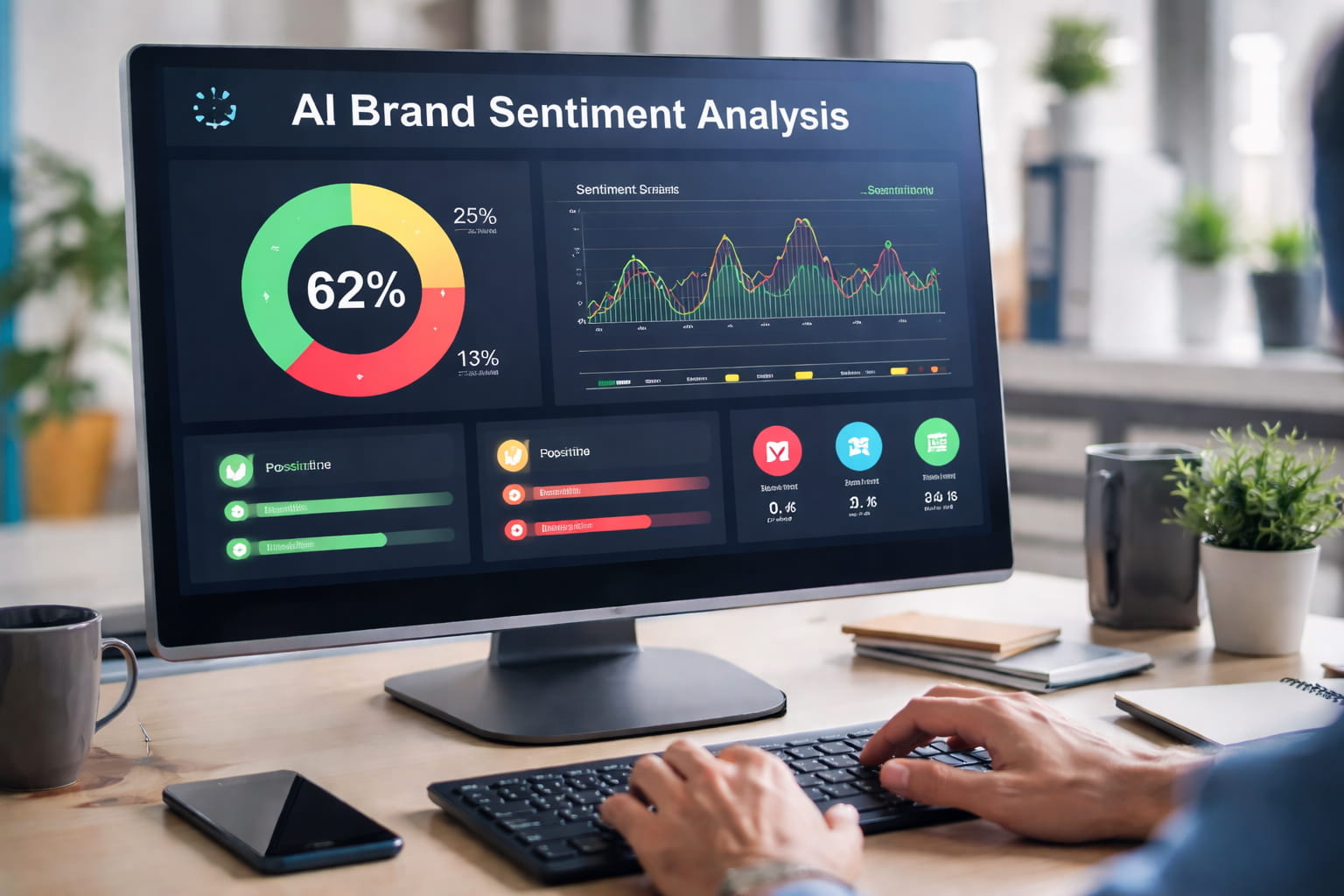
  • 9 Best AI Brand Sentiment Analysis Tools in 2026

    9 Best AI Brand Sentiment Analysis Tools in 2026

    Understanding and monitoring customers’ thoughts has become important in this customer-centric world. AI brand sentiment analysis tools help industries understand how customers perceive their brand across social media, reviews, and online discussion portals. These brand sentiment analysis tools use AI and NLP to detect opinions, emotions, and context in digital conversations. 

    Companies use them to detect crises, monitor, and analyze customer feedback across various platforms, and improve marketing decisions with insights. 

    What Are the Best AI Brand Sentiment Analysis Tools?

    AI Brand Sentiment Analysis Tools use artificial intelligence to track and interpret how people feel about a brand across online channels. They analyse conversations from social media, reviews, forums, and digital communities using natural language processing and machine learning. By 2026, many platforms also combine sentiment with trend detection and predictive analytics, helping marketing and PR teams identify reputation risks and opportunities earlier.

    Our 6-Step Evaluation Framework for Ranking AI Brand Sentiment Analysis Tools

    To identify the best AI brand sentiment analysis tools, we have applied a structured 6-step approach. Every platform is measured based on performance, usability, and AI capabilities.

    1. AI Sentiment Detection Accuracy
      • We assessed how accurately the tool identifies feelings or emotional tone and sarcasm context. For instance, advanced tools can distinguish between real praise and sarcastic comments in online conversations.
    2. Monitoring Sources and Data Coverage
      • Analyzed how many online sources the platform can monitor and detect, including social media platforms, blogs, and forums. High coverage ensures brands capture conversations across diverse channels.
    3. AI and ML integration
      • We evaluated the depth of AI technologies like MLP, ML models, and automated sentiment classification. These capabilities help in detecting patterns and predicting trends.
    4. Pricing Transparency
      • We have reviewed the platforms that provide clear pricing tiers, starting costs, or enterprise estimates. Transparent pricing helps firms compare tools that match their budgets and growth plans.
    5. Easy to Use and Dashboard Experience
      • We examined the UI/UX, dashboard clarity, and automated workflow capabilities. Platforms with minimal dashboards, visual analytics, and reports make it easy to interpret sentiment insights fast,
    6. Best Use Case
      • We checked how effectively each tool serves specific business teams such as marketing, PR, and customer experience. Tools with specific use cases help brand strategy departments with more actionable insights.

    The list below compares AI sentiment analysis tools based on key strengths, AI capabilities, best use cases, and started pricing.

    Best AI Brand Sentiment Analysis Tools (2026 Comparison)

    ToolBest ForAI CapabilityKey StrengthPricing (Starting)
    Brand watchEnterprise marketing & insights teamsNLP + image recognitionMassive data monitoring~$800/month
    Sprout SocialSocial media management teamsAI sentiment taggingSocial management + analytics~$249/month
    BrandnataBrand intelligence & analytics teamsContext + sarcasm detection95%+ sentiment accuracyCustom pricing
    TalkwalkerGlobal brands & PR teamsVisual AI + multilingual analysisImage & video sentiment~$960/month
    HootsuiteSocial media marketing teamsAI sentiment trackingIntegrated social platform~$99/month
    LexalyticsDevelopers & data teamsAPI-based NLP analysisFlexible integrationCustom pricing
    MentionStartups & marketing teamsReal-time AI monitoringEasy brand tracking~$49/month
    MeltwaterPR & communications teamsMedia intelligence AILarge media coverageCustom enterprise pricing
    AwarioDigital marketersAI social listeningLead discovery~$39/month

    Brandwatch

    Brandwatch is one of the most powerful AI brand sentiment analysis applications available today. This tool analyzes billions of online discussions across social media, news, blogs, and forums. Its AI engine detects emotional signals in texts and images, helping companies understand brand perception and customer sentiment.

    Best For: Enterprise marketing analytics team, trend detection, influencer Identification, multi-platform social media campaigns.

    Pricing: Dynamic pricing in the range of $800/month (pricing may vary).

    How AI Integration Works

    It uses natural language processing and machine learning to analyze billions of conversations, AI emotion detection, identify brand logos in images, and automate sentiment insights.

    Pros

    • Massive data coverage
    • Advanced emotion detection
    • Strong analytics dashboards

    Cons

    • High pricing
    • Complex for small teams

    Key Features

    • Sentiment tracking across 100M+ sources
    • Emotion recognition (joy, anger, fear, sadness)
    • AI logo detection in images
    • Custom dashboards and automated reporting

    Sprout Social

    Sprout Social is a blend of social media management and strong AI-driven sentiment analysis. It is an all-in-one tool that allows a team to track conversations around the brand as well as maintain an effective social presence from a defined dashboard.

    Best For: Social media teams that are interested in both management and analytics.

    Pricing: Starting around $249/month

    How AI Integration Works

    Sprout Social uses AI sentiment tagging and pattern recognition to detect trends and automatically categorize audience reactions over various social media channels.

    Pros

    • Combines management and analytics
    • Easy-to-use dashboard
    • Good collaboration tools

    Cons

    • Limited deep analytics compared to enterprise tools
    • Higher cost for smaller teams

    Key Features:

    • Combined social inbox and AI sentiment tagging.
    • Pattern recognition and trend analysis.
    • Demographic information on the audience.
    • Competitive benchmarking.

    Brandnata

    Brandnata is a game-changer AI brand sentiment analysis software that is specifically created to fulfill the needs of modern-day businesses. It provides highly accurate emotional insights from online conversations. The AI engine detects context, sarcasm, and cultural nuances that many classical sentiment analysis tools miss.

    Best For: Mid-size to large companies that need brand intelligence support and competitive research teams.

    Pricing: Custom pricing based on business needs

    How AI Integration Works

    Brandnata applies NLP models to detect context, sarcasm, and emotional tone, generating real-time AI brand and competitor sentiment insights.

    Pros

    • Extremely high sentiment accuracy
    • Strong competitor intelligence
    • Excellent crisis detection system

    Cons

    • Enterprise-focused features may be complex for beginners
    • Pricing details require consultation

    Key Features:

    • Sentiment analysis with more than 95% accuracy in multiple languages.
    • Real-time brand health scoring.
    • Comparison of competitor sentiments.
    • Crisis detection and alerts are automated.
    • Integration with big social sites and review sites.

    Why It Stands Out

    BrandNata’s AI engine is incredibly accurate at reading sarcasm and contextual sentiments, making it one of the best and most reliable sentiment tools for global brands analyzing multilingual consumer feedback.

    Talkwalker

    Talkwalker is an enterprise-level social listening analysis platform that offers powerful visual AI capabilities. The platform tracks the brand mentions in images and videos across online platforms.

    Best Suited: Global brands and PR monitoring teams.

    Pricing: Approx $960/month

    How AI Integration Works

    Talkwalker integrates NLP with visual recognition AI to analyze text, images, and videos, detecting brand mentions and sentiment across global conversations.

    Pros

    • Strong multilingual capabilities
    • Advanced visual monitoring
    • Excellent global media coverage

    Cons

    • Expensive for smaller businesses
    • Learning curve for new users

    Key Features:

    • Sentiment analysis of images and videos.
    • 187-language support
    • Identification and tracking of influencers.
    • Algorithms of crisis prediction.

    Hootsuite

    Hootsuite is a professional-level AI brand sentiment analysis that integrates the analysis within its social media management platform. Organizations can keep track of sentiment while publishing and managing social media campaigns.

    Best For: Social media marketing teams already using Hootsuite.

    Pricing: Starting around $99/month

    How AI Integration Works

    Hootsuite integrates AI sentiment classification with social listening algorithms to automatically analyze engagement trends and measure brand perception

    Pros

    • Easy integration with social workflows
    • Good reporting tools
    • Familiar interface

    Cons

    • Limited deep AI analytics
    • Sentiment analysis depends on Brandwatch integration

    Key Features:

    • Trend visualization of sentiment.
    • Share of voice metrics
    • Sentiment classification Automation.
    • Connection to the publishing tools of Hootsuite.

    Lexalytics

    Lexalytics is a text analytics and AI brand sentiment analysis company that provides services to businesses dealing with high amounts of unstructured data. They have on-premise and cloud services that are the most flexible.

    Best For: Developers and data science teams

    Pricing: Custom enterprise pricing

    How AI Integration Works

    Lexalytics uses advanced NLP and machine learning models to perform entity-level sentiment analysis, detect themes in text, and analyze large datasets via APIs.

    Pros

    • Highly customizable
    • Excellent for large datasets
    • Flexible deployment

    Cons

    • Requires technical expertise
    • Not ideal for non-technical users

    Key Features:

    • Sentiment analysis on an entity level
    • Theme identification and classification
    • 30+ language support
    • API-first architecture

    Mention

    Mention is an AI brand sentiment analysis tool that is available to both large and small businesses. The tool can track the brand mentions and conversations in social media, news, blogs, and forums at an impressive speed.

    Best Suited: Startup marketing teams and small to medium businesses.

    Pricing: Starting around $49/month

    How AI Integration Works

    Mention uses AI-driven monitoring algorithms to scan online conversations in real time and automatically classify sentiment.

    Pros

    • Easy to use
    • Affordable pricing
    • Real-time alerts

    Cons

    • Limited advanced analytics
    • Smaller data coverage compared to enterprise tools

    Key Features:

    • Live email messages and messages.
    • Sentiment score of every mention.
    • Searching abilities Boolean-wise.
    • Competitor tracking

    Meltwater

    Meltwater is a complete media intelligence company that has strong AI brand sentiment analysis features. The platform is good at measuring brand perception both in traditional and digital media.

    Best Suited: PR professionals, communications teams.

    Pricing: Custom enterprise pricing

    How AI Integration Works

    Meltwater applies AI-powered media monitoring and sentiment algorithms to analyze news, social media, and digital publications.

    Pros

    • Strong media coverage
    • Excellent PR analytics
    • Good influencer tracking

    Cons

    • Enterprise pricing
    • Complex platform setup

    Key Features:

    • Monitoring 270,000+ media.
    • Context preservation sentiment analysis.
    • Influencer database
    • PR analytics and reporting

    Awario

    Awario is a social listening and AI brand sentiment analysis tool that has an easy-to-use interface. This is used by brands to discover online conversations and analyze sentiment.

    Best For: Digital marketing teams and freelancers.

    Pricing: Starting around $39/month

    How AI Integration Works

    Awario uses machine learning sentiment classifiers and social listening algorithms to track brand mentions and filter conversations by emotion.

    Pros

    • Affordable pricing
    • Easy interface
    • Good lead discovery

    Cons

    • Limited enterprise features
    • Smaller data sources compared to premium tools

    Key Features:

    • Sentiment filtering.
    • Instant messaging.
    • Influencer scoring
    • Lead generation features

    How to Choose the Right AI Brand Sentiment Analysis Tool

    When selecting a sentiment analysis platform, consider these factors:

    1. Budget

    • Prices typically range from $39/month to enterprise-level solutions exceeding $1,000/month, so choose a platform that fits your budget and the scale of monitoring you need 

    2. Data Coverage

    Check how many platforms the tool monitors, including:

    • Social media
    • News websites
    • Blogs
    • Forums
    • Review platforms

    3. AI Accuracy

    Look for platforms offering 90%+ sentiment detection accuracy, especially for sarcasm and contextual sentiment.

    4. Integration

    Ensure the tool integrates with:

    • CRM systems
    • Marketing automation tools
    • Analytics platforms

    5. Multilingual Support

    • Global brands should prioritize tools supporting multiple languages and regional sentiment analysis.

    Final Thoughts

    Understanding customer emotions gives brands an edge online. AI sentiment analysis tools turn online conversations into useful insights.

    Platforms like Brandnata stand out for contextual sentiment accuracy, while tools such as Sprout Social and Brandwatch provide strong analytics and social monitoring capabilities.

    The key is to choose a tool that aligns with your team size, analytics needs, and marketing strategy so you can turn customer feedback into smarter brand decisions.

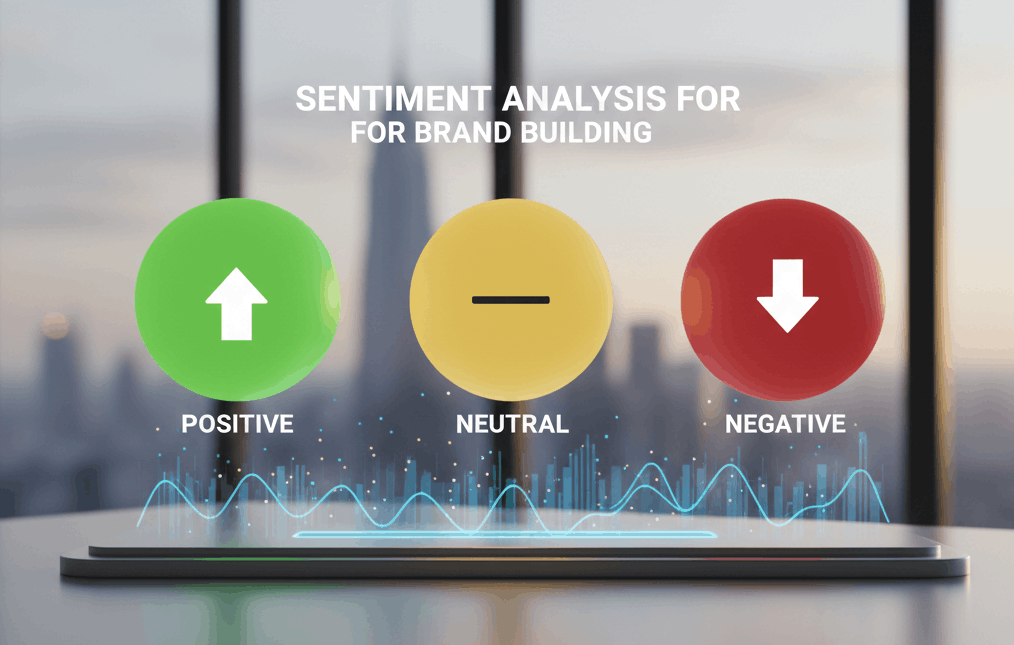
  • How to Use Sentiment Analysis for Brand Building?

    How to Use Sentiment Analysis for Brand Building?

    Brands today need to look beyond visibility. What really matters is how people feel about your brand. Sentiment analysis helps businesses understand these emotions by analysing online conversations. When brands know how customers feel, they can make smarter decisions about communication, reputation, and brand strategy.

    Sentiment analysis for brand building is the process of analysing customer opinions across social media, reviews, and online conversations to understand whether people feel positively, negatively, or neutrally about a brand.

    Strategically, it can enable businesses to develop more solid relationships, reputation insurance, and brand-building with certainty.

    This article explains how sentiment analysis works, why it matters for brand building, and how businesses can use it.

    What Is Sentiment Analysis?

    Sentiment analysis refers to the act of examining online discussions to determine the emotional tone. It assesses the presence of brand mentions, which are:

    • Positive – the expression of satisfaction, trust or advocacy.
    • Negative – expression of frustration, dissatisfaction or criticism.
    • Neutral – informational or emotionally neutral.

    This emotional understanding is much more effective as far as brand building is concerned than raw visibility, especially when learning how to use sentiment analysis for brand building in competitive markets.

    Why Sentiment Analysis Matters for Brand Building

    Brand development is closely related to perception. A brand with a high level of visibility with negative sentiment can have a problem with trust, whereas a brand with medium visibility and a high level of positive perceptions tends to have a quicker growth rate through loyalty and word of mouth.

    Sentiment analysis tools combine social listening, natural language processing, and customer feedback analysis to measure brand perception across digital platforms. 

    According to research by Esteban Kolsky, 72% of customers share positive brand experiences with others, making sentiment a strong driver of word-of-mouth growth.

    Sentiment analysis assists in brand building by assisting businesses:

    • Real-time customer emotion understanding.
    • Determine areas of strength and weakness of brand perception.
    • Identify reputational risks in time.
    • Keep the message in line with the expectations of the audience.
    • Earn a reputation using prompt and pertinent interaction.

    Regular sentiment monitoring helps brands act early instead of reacting to problems later. It allows them to build their brand proactively rather than only managing reputation when issues arise.

    How Sentiment Analysis Supports Different Brand-Building Goals

    The value of sentiment analysis becomes clearer when mapped to specific brand objectives.

    Brand-Building GoalHow Sentiment Analysis Helps
    Strengthening brand trustIdentifies positive feedback and recurring appreciation themes
    Improving customer experienceHighlights frustration points and unmet expectations
    Managing brand reputationDetects negative sentiment early to prevent escalation
    Refining brand messagingReveals which messages resonate emotionally
    Increasing brand loyaltyHelps understand what drives advocacy and repeat engagement
    Competitive differentiationCompares sentiment trends between your brand and competitors

    How to Use Sentiment Analysis for Brand Building?

    Keep Track of Emotional Trends, Not Mentions Only

    When mentions suddenly increase, it does not necessarily mean success. It might show discontent or disorientation. The analysis of sentiment trends over time provides an understanding of the brand, whether it is improving, declining or staying it is.

    The increase in positive sentiment is usually associated with high brand equity. Tools like BrandNata help track overall brand sentiment across platforms.

    Increase Brand Communication and Positioning

    Sentiment analysis shows which words, themes, or campaigns create positive reactions. These insights help brands refine their tone, storytelling, and positioning.

    If customers respond well to qualities such as transparency, simplicity, or responsiveness, brands should highlight these more clearly in their communication.

    Improve Customer Relationships

    Listening to feedback- particularly negative feedback- makes one responsible and caring. Quick response initiatives assist the brands in transforming displeased clients into devoted loyalists.

    Studies show that 65% of consumers say a positive brand experience influences them more than advertising.

    Even the neutral mentions can become opportunities for interaction and connection.

    Determine Brand Advocates and Influencers

    Positive sentiment often highlights loyal customers, creators, or influencers who already support your brand. These supporters can grow into long-term advocates who promote the brand through authentic voices.

    Service and Product Improvement in Support

    Repeated negative sentiment often points to recurring problems. These insights help product, support, and customer experience teams improve their offerings based on real customer feedback instead of assumptions.

    Customers are 2.4 times more likely to stay loyal to a brand when their problems are resolved quickly.

    Focus In-House Teams on Brand Impression

    Sharing sentiment insights across marketing, PR, customer support, and leadership helps teams understand how the brand is perceived outside the organisation.

    This alignment helps teams maintain a consistent brand voice and respond in a clear, coordinated way.

    Case Study: Microsoft Reversed an Xbox Policy After Negative Sentiment

    In 2013, Microsoft announced several policies for the Xbox One console, including strict digital rights rules and mandatory online check-ins. The announcement triggered strong negative reactions across social media, gaming forums, and tech media.

    By monitoring online discussions and sentiment trends, Microsoft quickly realised that gamers were strongly opposed to the restrictions. The backlash was visible across platforms such as Twitter, Reddit, and gaming communities.

    Within weeks, the company reversed several of its original decisions. Microsoft removed the always-online requirement and changed the digital game sharing rules.

    The change helped rebuild trust with the gaming community and improved perception before the console launch.

    Best Practices on Sentiment Analysis: When to Use and When Not

    When Should You Use Sentiment Analysis

    • Check the mood at all times, not on an infrequent basis.
    • Examine sentiment in a social situation, rather than in solitude.
    • Compare sentiment analysis on platforms.
    • Integrate sentimental data and engagement data.
    • Take action on what you know.

    When Sentiment Analysis May Not Be the Right Approach

    Sentiment analysis is valuable, but it should not be used in isolation or without context.

    • When the conversation volume is too low to reveal reliable patterns.
    • When sarcasm, humour, or cultural nuance may distort sentiment results.
    • When decisions rely only on sentiment without supporting customer data.
    • When brands react too quickly to short-term sentiment spikes without understanding the broader trend.
    • When automated sentiment results are used without human review.

    Sentiment insights are most effective when combined with other data such as customer feedback, engagement metrics, and market research.

    Frequently Asked Questions (FAQs)

    What is brand-building sentiment analysis?

    Sentiment analysis examines customer opinions in online conversations to determine whether brand perception is positive, negative, or neutral.

    Why is sentiment analysis effective in enhancing brand reputation?

    It helps brands detect negative feedback early and respond quickly. This prevents small issues from turning into larger reputation problems.

    Can sentiment analysis be applied to other brands, other than big brands?

    No. Small and growing businesses have equal advantages of knowing their customers and their feelings, improving messages, and building trust, even without having large marketing budgets.

    Which platforms are most appropriate for sentiment analysis?

    The most popular sources are social media, review sites, forums, blogs, and news media, as they attract the genuine opinions of the customers.

    What is the frequency of sentiment analysis?

    Sentiment analysis is a continuous or daily process that should be implemented to monitor perception change in real time in order to act appropriately.

    How does sentiment analysis help improve brand strategy?

    It reveals what customers appreciate, what frustrates them, and which messages resonate most. These insights help brands refine communication, improve products, and strengthen customer relationships.

    Conclusion: Using Sentiment Insights to Build Stronger Brands

    Emotion has become an important part of brand building today, not just visibility. The sentiment analysis provides businesses with the power of hearing more than what is spoken and gives insight into the real feelings of the audience.

    Through monitoring of emotions, providing responses, and calibration of strategy with customer feelings, brands can earn confidence, allegiance, and sustainability in relevance. Sentiment analysis offers clarity instead of guessing perception: it takes all the daily examples of conversation and turns them into an effective source of sustainable brand growth.

  • What Is Brand Sentiment Analysis? – A Practical Guide

    What Is Brand Sentiment Analysis? – A Practical Guide

    Even in an era dominated by digital, individuals are always posting their views of the brands on social media sites, review websites, forums, blogs, and news outlets. These are the views that are taken collectively to form the perception of a brand. It is no longer an adequate fact to hear that your brand is being mentioned. The real question is, when people are discussing your brand, how do they feel? This is the place where brand sentiment analysis is needed.

    The analysis of brand sentiment assists companies in knowing whether online conversations about their brand are good, bad, or even neutral, and most importantly, why. It converts cold mentions into emotive and contextual indications that can support smarter choices in marketing, customer experience, PR, and product strategy.

    What Is a Brand Sentiment Analysis?

    The brand sentiment analysis is the ability to find and quantify the tone of the emotions mentioned about a brand on online platforms. It breaks down language, wording, and the context in order to identify the satisfaction, frustration, trust, excitement, or indifference of people with a brand.

    Unlike the counting of mentions, sentiment analysis is concerned with meaning. As an illustration, the increase in brand mentions might reflect the rise in popularity or a new crisis. Sentiment analysis helps to make sense because it makes one see the emotional trend behind such conversations.

    Brand sentiment is usually divided into three categories:

    • Favorable feeling – compliment, referrals, trust, contentment.
    • Negative feelings – complaints, criticism, disappointment, frustration
    • Neutral feeling – unemotional mentions, questions, comparisons.

    The Operation of Brand Sentiment Analysis

    The present-day sentiment analysis of brands is based on both machine learning and natural language processing (NLP) to scale up text analysis. Such systems search online chats and examine words, tone, emojis, context, and even sarcasm in certain instances.

    It is typically carried out through:

    • Social media, news websites, reviews, blogs, and forums data collection.
    • Mentions are classified as positive, negative, or neutral.
    • Context interpretation to make sense of intent and meaning.
    • Long-term sentiment changes trend analysis.
    • Dashboard, alert, and report delivery of insights.

    This enables brands to shift towards proactive management of reputation as opposed to being reactive.

    Importance of the Brand Sentiment Analysis

    Securing the Brand Reputation

    Negative attitude will increase rapidly when left unattended. Sentiment analysis assists the brands in early recognition of dissatisfaction and addressing it before the problems escalate into social crises.

    Knowing the Customer Emotions

    Late or filtered opinions are usually picked in the customer surveys. Sentiment analysis shows genuine, live sentiments of customers using their own words.

    Enhancing the Marketing Performance

    Knowing what messaging positively works, brands are able to optimize campaigns, content tone, and positioning to fit the expectations of audiences.

    Justifying Product and Service Decisions

    Negative sentiment recurring around features, pricing or support points to areas of improvement necessary and positive sentiment points to areas to strengthen.

    Empowering Competitive Positioning

    By comparing the trend of sentiments of the competitors, the brands are able to know their position in the market in terms of emotion, as opposed to functionality alone.

    Brand Sentiment Analysis vs Brand Monitoring

    AspectBrand MonitoringBrand Sentiment Analysis
    Primary focusTracking mentionsUnderstanding emotions
    Data outputVolume and source of mentionsPositive, negative, neutral tone
    Insight depthSurface-level visibilityEmotional and contextual insights
    Use caseAwareness and alertsReputation, strategy, decision-making
    Strategic valueInformationalActionable

    While brand monitoring tells you what is being said, brand sentiment analysis explains how people feel and why it matters.

    The Source of Brand Sentiment Data

    Data is generally pulled on the brand sentiment analysis based on:

    • Social media X (Twitter), Instagram, LinkedIn, Reddit, and YouTube.
    • Google Reviews, G2, Trustpilot, etc.
    • News items and media reports.
    • Influencer and blog posts.
    • Community discussion boards and forums.

    The measurement of sentiment in a variety of channels guarantees a fair and correctly viewed brand perception.

    Common Challenges in Brand Sentiment Analysis

    • Sarcasm and irony, which may be hard to decode by the systems.
    • Ambivalent feelings in the same mention.
    • Language peculiar to the industry, which demands background knowledge.
    • The spikes in volumes in the period of campaigns or some crisis require special interpretation.

    This explains why sentiment analysis is effective when used together with contextual review and trend monitoring as opposed to single points of data.

    Best Practices in Exploring Brand Sentiment Analysis

    • Monitor sentiment on a regular basis, not on an ad hoc basis.
    • Volume and context: Combine volume with sentiment data.
    • Tracking of sentiment trends within a time frame, as opposed to daily snapshots.
    • Share knowledge between marketing, PR, product, and leadership.
    • Immediate response to negative sentiment and strength of positive discussions.

    Stability makes sentiment analysis a long-term strategic strength and not a response mechanism.

    Frequently Asked Questions (FAQs)

    What does brand sentiment analysis mean?

    Brand sentiment analysis is the act of learning the positive, negative, or neutral attitudes of people towards a brand due to online discussions.

    What is the measurement of brand sentiment?

    It is measured with the help of AI-driven text analysis that assesses language, tone, and context on social media, reviews, news, and forums.

    Why is brand sentiment more relevant than mention volume?

    Large mention volume is not necessarily positive attention. Sentiment can be used to indicate that attention builds or destroys brand trust.

    Is brand sentiment analysis beneficial to small enterprises?

    Yes. Sentiment insights can be used by even smaller brands to enhance customer experience, refine messaging, and avoid reputation problems in their initial stages.

    What is the frequency of checking the brand sentiment?

    Preferably, brand sentiment must be tracked in real time or on a constant basis to be able to detect changes as they occur.

    Conclusion

    Brand sentiment analysis has risen as a significant element of contemporary brand management. With an environment where opinions are formed and propagated in a very short period, emotional perception is equally significant as the visibility to be tracked. The brands, which actively analyze sentiment, are much clearer, protect their reputation, and make smarter decisions based on the actual emotions of people and not assumptions.

    With conversations converted into insights, a brand sentiment analysis enables businesses to remain responsive, credible, and in control of their own brand story, both today and in the long term.

  • 6 Best Brand Intelligence Software in 2026

    6 Best Brand Intelligence Software in 2026

    In an online society where impressions are formed through a touch of a button, brands cannot afford to be observed on the surface. They also need brand intelligence software, a tool that converts discussions, emotions, customer behavior, and competition signals into tactical insight.

    The newest brand intelligence software is not a follower of mentions. They break down the causes of talks, who leads these talks, emotional transformation, and what it will do to the situation in the event of long-term brand positioning. That is why brand intelligence software has become the need of marketing leaders, PR professionals, product strategists, and executives as well.

    Other services like Brandnata are designed to help brands stop passively listening and build intelligence into a type of structure that can enable a team to gain an understanding of narratives, risks, and opportunities at scale. The list below is a reviewed list of significant brand intelligence tools, which offers a different perception of brand impressions.

    SoftwarePrimary FocusIdeal ForKey Strength
    NetBase QuidMarket & consumer intelligenceLarge enterprisesDeep data analytics
    SynthesioSocial & audience intelligenceGlobal organizationsMarket comparison
    BrandnataNarrative & sentiment intelligenceGrowing & enterprise brandsActionable brand insights
    PulsarCultural & audience behaviorStrategy teamsCommunity analysis
    Brand24Real-time brand insightsSMBs & startupsSimplicity & alerts
    Zignal LabsMedia narrative intelligencePR & communicationsReputation monitoring

    1. NetBase Quid – Premium Consumer and Market Intelligence

    NetBase Quid

    A NetBase Quid is a very trusted brand intelligence software that is famous for incorporating consumer intelligence along with market intelligence. It deconstructs big data, both structured and unstructured, to uncover new trends, audience trends, and brand status.

    It became a trend with companies that require extensive analytics of industries and foreign markets.

    Ideal when:
    It needs to be carried out in a large organization, or the market research teams are to be conducted.

    Strengths:
    Wide analytics, market discovery of trends, and audience intelligence.

    2. Synthesio – Social Intelligence Enterprise Deep

    Synthesio

    Being a social listening AI, Synthesio provides audience segmentation and competitive benchmarking of brand intelligence. It allows the brand to make comparisons across markets in terms of perception, demographics, and time.

    It is used frequently by global organizations that need to have an organized cross-regional sense.

    Best bet:
    Analytics teams and multinational companies.

    Strengths:
    Market sentiments, audit, and comparison.

    3. Brandnata – The AI-Driven Brand Intelligence to Act on Insights

    BrandNata

    Brandnata is an intersection point of brand intelligence and strategic intelligence. Neither does it force teams with crude data; rather, it underlines a focus on conversations that are coded, emotional shifts, and narrative transitions in the digital media.

    Brandnata is developed with teams in mind that like clarity over noise – brands should know what is said, but what should be done.

    Best in:
    Brands will need pragmatic brand information which will enable them make decisions.

    Strengths:
    Change of feelings, change in storytelling, and organizational knowledge.

    4. Pulsar – Audience / Cultures Intelligence

    Pulsar

    Pulsar gives much attention to the conduct of the audience and cultural context, and it is an excellent decision to realize why individuals are responsive to brands and how narratives are shared in societies.

    Pulsar is not a firm that builds its strategy on volume alone but on influence, community clusters, and cultural relevance.

    Best:
    At the strategic level and at the cultural research level.

    Strengths:
    Audience analysis, culture analysis, and influence analysis.

    5. Brand24 – Real-Time Brand Intelligence for Growing Teams

    Brand24

    This is because Brand24 offers real-time alerts, sentiment tracking, and influencer identification to offer accessible brand intelligence. It is extensively used by growing brands that are interested in intelligence, as opposed to the complexity of an enterprise.

    Most appropriate:
    Start-up and mid-size companies.

    Assets:
    Real-time alerts, sentiment tracking, and easy to use.

    6. Zignal Labs – Media and Narrative Intelligence

    zignallabs

    Zignal Labs is a media intelligence and narrative tracking corporation that helps organizations understand how stories unfold in news, social media, and digital publications.

    Specifically, it is useful in reputation management, policy tracking, and high-impact communications.

    Best:
    PR departments and reputation-based organizations.

    Strengths:
    Tracking narrative, media intelligence, risk detection.

    The Choice of the Appropriate Brand Intelligence Software

    Grades of brand intelligence software include:

    • Not mention volume, depth of insight.
    • Sentiment, understanding of narrative.
    • Inter-team/inter-market scalability.
    • Dashboard and reporting understandability.
    • The capability to transform wisdom into practice.

    The most appropriate tools are those that make things less complex and clearer.

    FAQs

    What is brand intelligence software?

    Brand intelligence software gathers and processes brand-related information over the digital medium to gather perception, sentiment, trends, and competitive positioning.

    What are the differences between brand intelligence and brand monitoring?

    Brand monitoring follows mentions, and brand intelligence reads between the lines, the behavior of the audience, and the long-term trends.

    Will brand intelligence software be useful in regard to reputation management?

    Yes. Brands can foresee the dangers that are about to happen and solve them before they develop into a problem by detecting the narrative change and sentiment shifts early on.

    Conclusion

    In the digital world that is constantly networked, the brand intelligence software starts to become inevitable. Single-instinct and delayed feedback-based brands are likely to lose out on perception, relevance, and trust.

    The correct platform will help businesses to perceive what is being said as it is said, make sense of a sentiment change, and take action. Brand intelligence makes brand signals strategic across all fronts, whether an enterprise or a seed that needs to gain ground.

    Having tools that are audience-centered to storytelling systems and solutions, such as Brandnata, that are action-oriented, modern-day brands can now move beyond listening to being lead creators of their brand story.

  • 7 Best AI Brand Monitoring Tools in 2026

    7 Best AI Brand Monitoring Tools in 2026

    In the contemporary online world, your brand is being discussed, with or without you. All engagements, be it through social media correspondence and reviews, media reporting, and forums, shape the perception of people. This is extremely essential to AI brand monitoring tools. They help businesses to track brand mentions in real time, perform sentiment analysis, trends, and active response.

    The number of tools is dozens, so it is hard to find the necessary one. To generate the selection faster, as of today, there is a list of the most effective tools of AI brand monitoring, selectively given, beginning with a more modern tool that will help you to do what it says.

    Tool NameBest For / Use CaseKey FeaturesIdeal For
    BrandwatchEnterprise social listening & analyticsAdvanced AI sentiment analysis, customer profiling, competitive benchmarkingLarge organizations, global brands
    TalkwalkerVisual + text brand monitoringLogo/image recognition, global media tracking, AI sentiment analysisFashion, FMCG, visual brands
    MentionSimple real-time alertsInstant alerts, basic sentiment, easy UISmall teams, startups
    BrandNataSmart AI-driven brand insightsReal-time monitoring, contextual sentiment, risk detection, clean dashboardsModern brands, marketing teams
    Sprout SocialMonitoring + social media managementUnified inbox, trend tracking, strong reportingSocial media-driven brands
    AwarioBudget-friendly brand trackingReal-time alerts, competitor monitoring, sentiment analysisStartups, growing brands
    MeltwaterPR & media intelligenceMedia coverage analysis, reputation tracking, AI insightsPR & communications teams

    Brandwatch – Social Listening Enterprise

    brandwatch

    Brandwatch is one of the most successful AI brand monitoring tools available on the market. It is developed on the principle of such businesses that demand social listening and deep analytics.

    Brandwatch analyses millions of online conversations using highly developed AI and machine learning to determine how people behave, feel, and trend. Particularly, it is useful in foreign firms that monitor the market and require multiplicity of languages.

    Key strengths include:

    • New social media analytics.
    • Customer profiling and market knowledge.
    • Competitive benchmarking

    However, it is more difficult and more costly, and it can be the only solution in big organizations where a group of analysts can be found.

    Talkwalker – Visual and Text-Based Brand Monitoring Tool

    Talkwalker

    The brand monitoring tool, Talkwalker, has a great visual recognition level and is based on AI. This will mean that it is able to scan not only the textual sources but also brand logos and images sent to social media and other web-based sites.

    It is a very good choice among brands in terms of identity, which includes all, fashion, and consumer goods firms.

    Talkwalker offers:

    • Artificial intelligence sentiment analysis.
    • Image and logo recognition
    • Global media monitoring

    Its advantage is that it incorporates both traditional brand surveillance and visual brand smartness.

    Mention – Real-Time Alerts on Mentions of the Brand

    Mention

    Mention is just a plain example of AI brand monitoring software that is utilized by firms in scenarios where they require a quick look at what is being said about them over the internet.

    It tracks referrals of your brand on social media, blogs, forums, and news outlets, which give you their notifications in real time once your brand name is mentioned. It features an easy and intuitive interface and, therefore, can be applied to small and medium teams.

    Mention is ideal if you need:

    • Instant brand mention alerts.
    • Basic sentiment analysis
    • Easy setup and usability

    It does not go that deep on the intelligence layers, but when active monitoring and interactivity are needed, then it could be very beneficial.

    BrandNata – AI-Driven Brand Monitoring Built for Clarity

    BrandNata

    BrandNata is among the smartest and most provocative AI brands tracking tools, which are attractive to modern brands that are seeking more than raw data. Instead of screaming to be mentioned by the users, BrandNata strives to make brand chats into everyday wisdom, functional smarts.

    The platform is an AI-based one that provides tracking of the mentions of the brand on popular social media, digital news sites, forums, and review websites. It goes the extra mile in reading emotion, identifying changes in the story, and highlighting the issues that strike your brand the most.

    It is efficient, particularly anywhere the teams want:

    • Real-time monitoring of brand referencing.
    • AI-based sentiment and context analysis.
    • Early detection of reputational risks.
    • Dashboards instead of disorganised reports.

    BrandNata helps emerging brands and businesses to make the transition from listening to managing the brand actively.

    Sprout Social – Brand Monitoring Meets Social Management

    Sprout Social

    SproutSocial is primarily perceived as a tool to manage social media, though it has a brand monitoring option that is under the control of AI.

    It allows the brands to track mentions, hashtags, and keywords and correlate insights to processes of publishing, engaging, and reporting. This would be useful with a brand that is socially determined by the media.

    Key benefits include:

    • Unified social inbox
    • Trading emotion, Trend trading.
    • Strong reporting features

    Sprout Social is the most suitable option in terms of monitoring and social implementation in one system.

    Awario – Affordable AI Monitoring for Growing Brands

    Awario

    Awario is a relatively cheap brand monitoring AI software that does not require an enterprise cost but is well-equipped. It tracks social media, web mentions, blogs, and forums.

    Awario also has competitor monitoring features, and therefore, can be useful in new businesses and startups that want to understand their position in the market.

    Notable features include:

    • Real-time alerts
    • Sentiment analysis
    • Monitoring of mentions of competitors.

    It is then viable when a brand is identified to attain value and flexibility.

    Meltwater – Media Intelligence with AI Insights

    Meltwater

    Meltwater is a popular product among the communications and PR departments since it pays a lot of attention to media tracking and PR insights.

    Its AI will help to comprehend the brand’s willingness, the coverage of the media, and the surfacing stories within the digital news and social sites.

    Meltwater is best suited for:

    • PR and communications teams
    • Media coverage analysis
    • Reputation tracking

    It is media intelligence and not social listening.

    How to Choose the Right AI Brand Monitoring Tool?

    Various factors to be considered during the choice of an AI brand monitoring tool include:

    • Sources of information: Reviews, Social media, News, and Forums.
    • Artificial intelligence level: Trend, context, and sentiment.
    • Professionally formulated dashboards and alerts which are user-friendly.
    • Scalability: The ability to scale along with your brand.

    The tools like BrandNata are specialized in turning brand mentions into actionable insights. This is why such tools are a good option when the brands do not want to see noisy clouds in place of the clear ones.

    Final Thoughts

    The option of monitoring the AI brand is no longer an option. They are decisive on brand perception, reputation protection, and need to stay competitive in fast-changing digital marketplaces.

    Whether you are tracking first reactions of a venture or are an established company with huge perception to handle, the right tool can turn the talks into a business asset. BrandNata is an example of a website that uses AI to decrease the stress of brand tracking.

    FAQs

    What is an AI-based brand-monitoring tool?

    The term AI-based brand-monitoring tool refers to technology powered by artificial intelligence (AI). These tools can track when a brand has been mentioned on all types of websites and social media, as well as blogs, forums, and review websites. They also analyze for positive or negative sentiment about brands, determine trending or viral brand topics, and identify risks to a company’s reputation based on what people are saying about the brand.

    Why is having an AI brand-monitoring tool so important for businesses today?

    With an AI brand-monitoring tool, businesses can gain insights into their reputation and how people find them online in real-time. A brand-monitoring tool will also enable companies to quickly react to criticisms and negative feedback, and also provide competitive intelligence about their competitors who may be using the tool.

    How is using an AI brand-monitoring tool different from manually tracking a brand?

    AI brand-monitoring tools work by automatically aggregating huge amounts of data, analyzing the sentiment and context of that data, identifying trends within a brand’s industry, and providing businesses with that information in an easy-to-understand format. In contrast, manually tracking a brand requires businesses to sort through each piece of data to extract meaningful insights from it.

  • What Is Brand Intelligence? – Guide for Modern Marketers

    What Is Brand Intelligence? – Guide for Modern Marketers

    The digital-first economy does not prioritize advertising budgets and creative campaigns as the only elements of the success of the brand. Information, discussions, impressions, and the competitive environment influence it. Any and every interaction, such as a review by a customer, a discussion on social media, a comparison with a competitor, or a mention of a news item, all build up to the meaning of the brand in the market. This has become increasingly complex, and brand intelligence is becoming an important asset that businesses of any size must have.

    Brand intelligence helps organizations to get out of baseless assumptions and decisions made based on gut. Rather, it offers a systematic means of knowing how a brand is faring, its perception, and its performance relative to other brands in the industry. In a world where perception may shift at a very high rate, brand intelligence plays a role in keeping companies informed, agile, and strategic.

    This guide defines the concept of brand intelligence, its importance, the mechanisms of operation, and the way it can be effectively applied to scale by brands.

    What Brand Intelligence Means in the Digital Space?

    The brand intelligence is the procedure of gathering, examining, and explaining data concerning the perception, discourse, and positioning of a brand in both digital and offline platforms. It combines learnings of brand mentions, sentiment analysis, behavior, and market trends, as well as competitor activity, to present a full picture of the brand health.

    Brand intelligence generally uses various sources of information, such as:

    • Twitter (X), Instagram, LinkedIn, Reddit, and YouTube Social Media.
    • News publications and media coverage on the Internet.
    • Articles of thought leadership, blogs, and influencer content.
    • Google Reviews, G2, and Trustpilot Reviews.
    • Communities, discussion boards, and forums.

    Brand intelligence is a level that deals with analysis as opposed to merely monitoring the brand. It does not just study what is being said but why, who, and how the perceptions change with time.

    The Fundamentals of Brand Intelligence

    Several intertwined elements form the basis of brand intelligence, and collectively they offer meaningful intelligence.

    Knowledge of the Public Perception and Sentiment

    The most important aspect of brand intelligence is the understanding of whether the opinion of the masses is negative, positive, or even neutral. Sentiment trends assist businesses in determining changes in customer confidence and satisfaction before they affect the revenue or loyalty.

    Being Familiar with the Audience and Conversation Situation

    Brand intelligence examines the users of the brand and how they are using it. This is the demographics of the audience, the discussion platforms, and the purpose of mentions, be it informational, promotional, or critical.

    Competitive Positioning Evaluation

    A powerful brand intelligence strategy investigates the competitors of the brand. This comparison brings in the gaps, strengths, weaknesses, and opportunities in the market.

    Monitoring Trends and Brand Storylines

    Through a series of changes over a period, the brand intelligence can determine emergent narratives, dissimilar concerns, and swelling areas of interest, which could be part of brand strategy.

    The Reason the Brand Intelligence Has Become a Business Necessity

    Insuring and Building Brand Reputation

    Brand intelligence aids companies in identifying reputational risks in the early stages. Organizations will be able to react swiftly to misinformation or information by quickly detecting such bad stories, and then reactive actions will become proactive.

    Empowering Smarter Strategic Choices

    With actual information, marketing, product development, customer experiences, and decisions, leadership is better. Brand intelligence removes guesswork by bringing a sense of clarity.

    Understanding Customers More Deeply

    Through the analysis of customer language and sentiment, the brands can identify both what the customers really appreciate, anticipate, or dislike, which is usually eluded in the traditional survey.

    Keeping Ahead by Competitive Insight

    Competitor monitoring with brand intelligence enables companies to predict market changes, competitor positioning, and market to find differentiation opportunities.

    What Goes on Behind the Scenes of Brand Intelligence Systems

    Special platforms that have automated data collection and analysis are usually required to facilitate brand intelligence. These systems:

    • Combine brand-related information in several digital platforms.
    • Use sentiment analysis and contextual analysis to categorize chats.
    • Determine brand perception patterns, trends, and mavericks.
    • Current knowledge in the form of chat boards, notifications, and reports.
    • Promote short- and long-term strategic decisions.

    This is an automated method that substitutes the piecemeal manual tracking and offers an identical, scalable perception of brand execution.

    Multichannel and Multiteam Scaling of Brand Intelligence

    Increasing the number of channels to manage perception makes the management more complicated as the brands increases. A deeper brand intelligence platform like Brandnata has a role to play in this regard and concentrates on insights and makes them implementable.

    At scale, brand intelligence usually comprises:

    • Integrated tools that bring these channel-based insights and mentions together.
    • Sentiment and narrative analysis with the aid of AI to monitor perception changes.
    • Live notification on mentioning high impacts or sudden changes of sentiment.
    • Benchmarking instruments to evaluate the brand performance relative to competition.
    • Trend-driven analyses of long-term brand and marketing strategies.

    This is the method that enables the teams to shift from passive observation to active brand management.

    Effective Strategies of Transforming Brand Intelligence into Action

    The businesses are encouraged to do the following to reap the absolute value of brand intelligence:

    • Always check in, and not once in a while.
    • Integrate emotion information with background knowledge.
    • Exchange marketing, PR, product, and leadership ideas.
    • Monitor the competition whilst keeping up with your brand.
    • Take action on guidance immediately to build on trust and credibility.

    Coherence and harmony between teams make brand intelligence a strategic asset in the long term.

    Frequently Asked Questions on Brand Intelligence

    What is brand intelligence, simply put?

    Brand intelligence is understanding how the crowd views a brand and discusses it based on information provided in social media, news, review services, and other online platforms.

    What is the difference between brand intelligence and brand monitoring?

    Brand monitoring is the simplest, as it refers to monitoring mentions, whereas brand intelligence goes to a deeper level by covering sentiment, situations, trends, and the position in the marketplace.

    What is the significance of brand intelligence in contemporary companies?

    It assists businesses to safeguard their reputation, know their customers, make informed decisions, and also remain competitive in volatile markets.

    Final Thought: Competitive Advantage out of Conversations

    Modern brand management has seen the use of brand intelligence as a necessary component. Businesses can no longer afford to operate on intuitions or slow feedback, as perceptions are determined in real time. Realizing the perception of a brand, the reasons behind the dialogue, and the story development can help organisations remain responsive and strong.

    Brand intelligence, with the proper means and method, will help turn conversations into insights and insights into confident, data-driven action to keep the brand informed, competitive, and in charge of its narrative.

  • How to Monitor Brand Mentions? – A Step-by-Step Guide

    How to Monitor Brand Mentions? – A Step-by-Step Guide

    In the digitized first world today, the ability to monitor brand mentions is a business-critical skill set. All of your tweets, reviews, comments, blog posts, and news articles add to the perception of your brand online. These online discussions directly impact customer confidence, decision to purchase, investor, and brand value in the long run.

    The process of building brand perception is also not confined to marketing campaigns, but it is formed continuously via online conversations. One negative word of mouth can go viral, and a word of mouth at the right time can go a long way in enhancing credibility. This increase in the power of online discussion renders it imperative to learn how to keep track of brand-name mentions in contemporary brands.

    This guideline describes how to track mentions of a brand, its significance, and the way brands may perform it at scale with the help of modern tools and organized processes.

    What Does It Mean to Track Brand Mentions?

    Monitoring brand mentions are regarded as constant tracking, accumulating, and assessing of all the times your brand was mentioned in digital media.

    In order to understand how to monitor the mentions of the brand, it is necessary to follow various sources, such as:

    • Some of the social media included Twitter (X), Instagram, Reddit and YouTube.
    • News portals and online magazines.
    • Blogs and the material of influencers.
    • Attributes Review sites, including Google reviews, G2 and Trustpilot.

    At the community level, there are forums and discussion boards.

    However, the level of knowing how to monitor brand mentions does not count at the number of times your brand is mentioned.

    It also focuses on:

    • Emotion to establish positive, negative or neutral mentions.
    • Context analysis so that you can know why people are talking about your brand.
    • Trend analysis in order to track the shift in perception of the society.

    In other words, the mentions of the brand tracking help the businesses to arrive at the concept of what people think, feel and say about their brand – and how those stories unfold.

    How to Monitor Brand Mentions

    The Reason of Monitoring Brand Mentions.

    Putting up a Shield of Brand Reputation

    One of the most important reasons why one has to learn how to track brand mentions is reputation protection. Unfavorable or misleading news can spread with extremely high speed in case it is not identified. Brand monitoring helps a company to determine such mentions early enough and take the appropriate action before it spills over.

    Knowing Customer Feeling

    Using the brand mentions and their classification per sentiment, businesses can get clear data on how customers actually feel about their products, services, and experiences. The tendency of sentiments with time will lead to the understanding that a positive growth, a negative growth, or stagnation is observed in the population.

    Determining Growth Opportunities

    The opportunities to engage, form new partnerships, or amplify the campaign often emerge on positive brand mentions, references to influencers, and trending conversations, as well as user content. Brand mention monitoring will provide the opportunity to monitor and ensure that these opportunities are taken.

    Acquiring Competitive Intelligence

    Brand mentioning needs to be monitored not just on your brand. Mentions of competitors will aid companies in knowing the trend in the industry, customer taste and preferences, and where they might be creating gaps through which they can differentiate.

    Monitoring Brand Mentions: Step-by-Step

    Step 1: Find Channels of Interest

    The initial learning process in learning to monitor brand mentions will involve identifying where your target group talks a lot about your brand. This usually comprises social media networks, news platforms, blogging sites, discussion sites, and review websites.

    Step 2: Identify Keywords and Tracking Terms

    Ensuring that the brand name is monitored is not the optimal practice related to brand mention monitoring. It is full of product names, hashtags and shortened or misspellings regularly used with your brand.

    Step 3: Sentiment and Context Analysis

    Sentiment analysis is used after the mentions have been gathered to determine the positive conversations, negative conversations, and the neutral ones. Context analysis gives a clue to the fact that it was stated and gives a better grasp of the intentions and expectations of the audience.

    Step 4: Monitor the Trends and Changes in Volume

    The nature of brand mentions volume and tone shifting with time can be monitored in order to identify new trend or there is a possible crisis, or the brand might be experiencing increased brand advocacy.

    Step 5: Act on Insights

    Making an insight into how brand mentions can be monitored is only viable when put into action. It is essential to have a prompt response to the negative feedback of the customer.

    Watching Twitter Brand Mentions at Scale

    As more brands are mentioned, it becomes ineffective and unreliable to monitor them manually. This is where the use of advanced platforms such as Brandnata facilitates the process of tracking mentions to the brand at scale.

    Under Brandnata, the businesses enjoy the following:

    • One-stop real-time monitoring integrating mentions in various channels in the same dashboard.
    • Both analyses founded on AI, sentiment and narrative analysis help teams to learn conversation dynamics.
    • Live alerts, which enables the immediate reaction to the situation by responding to the increase in negative or other mentions with high impact.
    • Expansive brand awareness that is centered on observing and analytics, comparative benchmarking, and trend knowledge.

    It is a misuchievous approach in such a way that the teams are not required to work in the reactive state of monitoring, but to take initiative in the management of their brands.

    Monitoring the Mentions of a Brand: Best Practices

    To gain maximum use of brand monitoring, businesses ought to:

    • Target platforms on which the audience is most active.
    • Monitor other keywords other than the brand name.
    • Competitors must be monitored at all times to benchmark.
    • Act swiftly on feedback, good and bad.
    • Enforce uniformity by using automation without adding workload.

    Consistency will make brand mentions tracking a strategic benefit over time and not a responsive operation.

    Frequently Asked Questions (FAQs)

    What do you do to track brand mentions?

    Brand mentions are the process of tracking conversations about your brand on social media, news websites, blogs, discussion boards, and review websites, and analyzing the sentiment and trend.

    Why should monitoring brand mentions matter?

    It assists companies to defend their reputation, customer feelings, open opportunities, manage crises, and remain competitive.

    What platforms are to be followed in mentions of the brand?

    The most popular sources are social media, online news pages, blogs, review sites, and community forums.

    How far should the mentions of the brand be monitored?

    The mention of surveillance of the brand should not be sporadic. Monitoring in a day or real time would ensure that appropriate responses and accurate insights are realized.

    Will brand mention monitoring useful in resolving the crisis?

    Yes. Bad feelings may be detected timely manner, which allows companies to respond swiftly, eliminating reputational risk.

    Final Thoughts

    The ability to keep track of the mentions of a brand is no longer a choice, but a necessity. With a business, online dialogues have the ability to affect trust within hours, it is in the best interest that the business should be aware of how they are being mentioned.

    With the proper mindset and the use of the right tools such as BrandNata, the businesses will stop listening to the conversations. They get to understand how to read between the lines, act, and remain at the center stages of their brand stories.

    Regardless of the effects of whether you are a young startup or have a fully-fledged company with several brands running, proper brand mention tracking keeps you in the know responsive and ahead of the discussion at all times.