
People have always talked about brands – but today, those conversations are louder, faster, and more far-reaching than ever. Across social media platforms, review sites, blogs, forums, and news outlets, public opinion forms and spreads in real time, collectively shaping how a brand is perceived.
The analysis of brand sentiment helps companies determine whether online conversations about their brand are good, bad, or neutral. It converts cold mentions into emotive and contextual cues that can support smarter choices in marketing, customer experience, PR, and product strategy.
Nearly 48% of consumers report interacting with brands on social media more frequently than they did 6 months ago, and 90% of people use social platforms to follow cultural trends and stay updated on key moments.
However, tracking itself is no longer enough. A brand might get thousands of mentions, but the main question is:
Are people happy, frustrated, or indifferent about the brand?
Brand sentiment analysis always answers this by converting raw conversations into emotional insights and contextual understanding.
Instead of only counting mentions, it also reveals:
- Customer satisfaction levels
- Emerging complaints
- Brand trust signals
- Market perception trends
These insights allow organizations to make data-driven decisions across various marketing, PR, product development, and customer support.
Why Does Brand Sentiment Analysis Matter for Your Business?
Brand sentiment analysis measures how people feel about a brand by analyzing online conversations across social media, reviews, forums, blogs, and news platforms. It identifies whether mentions express positive, negative, or neutral emotions and reveals the reasons behind those feelings. Businesses use these insights to monitor reputation, improve customer experience, and make smarter marketing and product decisions.
Types of Brand Sentiment
Brand monitoring is typically categorized into three major emotional groups.
| Sentiment Type | Meaning | Examples |
| Positive Sentiment | Customers express satisfaction, trust, or excitement | Praise, recommendations, positive reviews |
| Negative Sentiment | Customers express frustration or disappointment | Complaints, criticism, and poor service experiences |
| Neutral Sentiment | Mentions without strong emotion | Questions, comparisons, informational mentions |
Tracking these categories with time helps brands identify reputation trends and audience perception shifts.
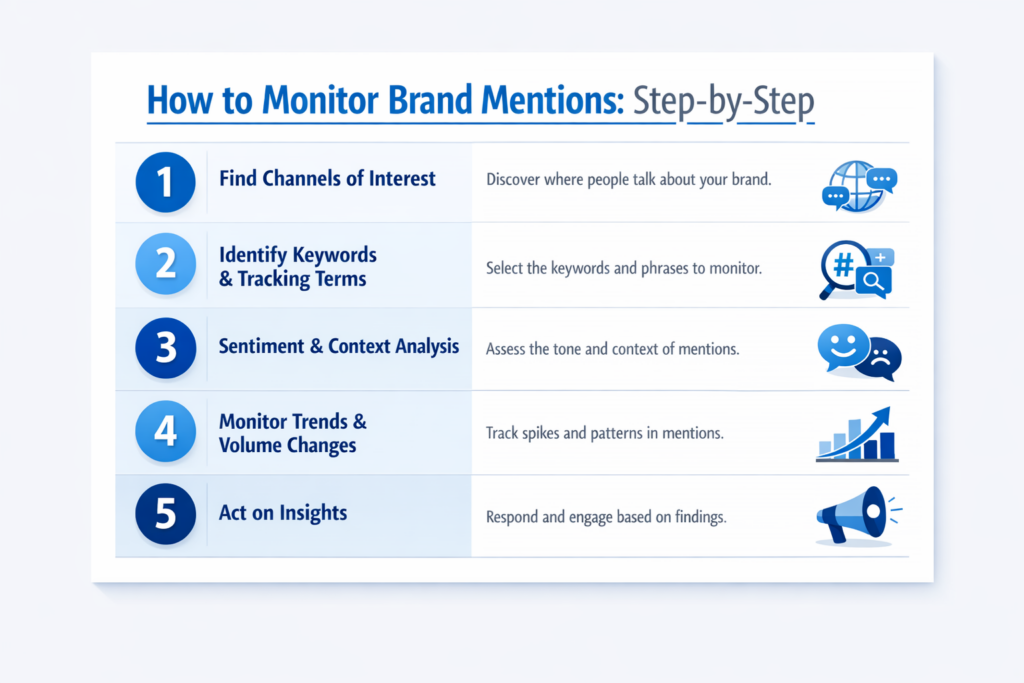
What Goes On Behind the Brand Sentiment Analysis?
Modern-day sentiment analysis of brands is based on both machine learning and natural language processing (NLP) to scale up text analysis. Such systems search online chats and examine words, tone, emojis, context, and even sarcasm in certain instances.
It is typically carried out through:
- Social media, news websites, reviews, blogs, and forums data collection.
- Mentions are classified as positive, negative, or neutral.
- Context interpretation to make sense of intent and meaning.
- Long-term sentiment changes trend analysis.
- Dashboard, alert, and report delivery of insights.
This enables brands to shift towards proactive management of reputation as opposed to being reactive.
Today, online conversations strongly influence purchasing decisions and brand reputation. Research shows that over 70% of consumers trust online reviews as much as personal recommendations, which means that public sentiment expressed online directly affects how a brand is perceived in the market.
Why Brand Sentiment Analysis Is More Important Than Ever
Securing the Brand Reputation
A negative attitude will increase rapidly when left unattended. Sentiment analysis assists the brands in early recognition of dissatisfaction and addressing it before the problems escalate into social crises.
Knowing the Customer Emotions
Late or filtered opinions are usually picked in the customer surveys. Sentiment analysis shows genuine, live sentiments of customers using their own words.
Enhancing the Marketing Performance
Knowing what messaging positively works, brands are able to optimize campaigns, content tone, and positioning to fit the expectations of audiences.
Justifying Product and Service Decisions
Negative sentiment recurring around features, pricing, or support points to areas of improvement necessary, and positive sentiment points to areas to strengthen.
Empowering Competitive Positioning
By comparing the trend of sentiments of the competitors, the brands are able to know their position in the market in terms of emotion, as opposed to functionality alone.
Brand Sentiment Analysis vs Brand Monitoring
| Aspect | Brand Monitoring | Brand Sentiment Analysis |
| Primary focus | Tracking mentions | Understanding emotions |
| Data output | Volume and source of mentions | Positive, negative, neutral tone |
| Insight depth | Surface-level visibility | Emotional and contextual insights |
| Use case | Awareness and alerts | Reputation, strategy, decision-making |
| Strategic value | Informational | Actionable |
While brand monitoring tells you what is being said, brand sentiment analysis explains how people feel and why it matters.
Key Sources of Brand Sentiment Data
Data is generally pulled for the brand sentiment analysis based on:
- Social media X (Twitter), Instagram, LinkedIn, Reddit, and YouTube.
- Google Reviews, G2, Trustpilot, etc.
- News items and media reports.
- Influencer and blog posts.
- Community discussion boards and forums.
The measurement of sentiment in a variety of channels guarantees a fair and correctly viewed brand perception.
Practical Use Cases of Brand Sentiment Analysis
Brand sentiment analysis has multiple real-world applications.
Campaign Performance Monitoring
Brands analyze sentiment during marketing campaigns to understand audience reactions.
Example insights include:
- Whether messaging resonates with audiences
- Which campaign elements trigger negative feedback
- Which platforms generate the most positive engagement
Crisis Detection and Reputation Management
Sudden spikes in negative sentiment often indicate emerging issues.
Early alerts allow brands to:
- Address customer complaints quickly
- Clarify misinformation
- Prevent reputation damage
Competitor Analysis
Brands can compare sentiment levels across competitors to understand market perception.
For example:
- Which brand do customers trust more
- Which products receive more criticism
- Market positioning gaps
Product Feedback Analysis
Sentiment insights reveal:
- Frequently praised product features
- Common complaints
- Customer expectations for improvements
Case Study Example: McDonald’s Sentiment Monitoring
Large global brands often rely heavily on sentiment analysis to track public perception.
For example, when McDonald’s launches a new product, the company monitors:
- Social media reactions
- Customer reviews
- Influencer discussions
- News coverage
Sentiment insights help them quickly determine whether the launch is positively received or generating complaints.
If negative sentiment spikes, the company can respond by:
- Adjusting marketing messaging
- Clarifying product information
- Addressing customer feedback directly
This proactive monitoring helps protect brand reputation and improve customer experience.
A 5-Step Framework for Turning Sentiment Into Strategy
- Monitor sentiment regularly, not on an ad hoc basis.
- Volume and context: Combine volume with sentiment data.
- Tracking of sentiment trends within a time frame, as opposed to daily snapshots.
- Share knowledge between marketing, PR, product, and leadership.
- Immediate response to negative sentiment and strength of positive discussions.
Stability makes sentiment analysis a long-term strategic strength and not a response mechanism.
Frequently Asked Questions (FAQs)
What does brand sentiment analysis mean?
Brand sentiment analysis is the act of learning the positive, negative, or neutral attitudes of people towards a brand due to online discussions.
What is the measurement of brand sentiment?
It is measured with the help of AI-driven text analysis that assesses language, tone, and context on social media, reviews, news, and forums.
Why is brand sentiment more relevant than mention volume?
Large mention volume is not necessarily positive attention. Sentiment can be used to indicate that attention builds or destroys brand trust.
Is brand sentiment analysis beneficial to small enterprises?
Yes. Sentiment insights can be used by even smaller brands to enhance customer experience, refine messaging, and avoid reputation problems in their initial stages.
What is the frequency of checking the brand sentiment?
Preferably, brand sentiment must be tracked in real time or on a constant basis to be able to detect changes as they occur.
Final Thoughts
Brand sentiment analysis has risen as a significant element of contemporary brand management. With an environment where opinions are formed and propagated in a very short period, emotional perception is equally significant as the visibility to be tracked. The brands, which actively analyze sentiment, are much clearer, protect their reputation, and make smarter decisions based on the actual emotions.
Because consumers increasingly rely on online conversations and reviews when making purchasing decisions, understanding public sentiment has become essential for brands that want to protect their reputation and build trust.
The brands that are proactive in sentiment analysis are far more transparent, defend the brand, and make more intelligent decisions based on the actual feelings of individuals, and not assumptions.
With conversations converted into insights, a brand sentiment analysis enables businesses to remain responsive, credible, and in control of their own brand story, both today and in the long term.

Leave a Reply