
Brand intelligence uses artificial intelligence to monitor how your brand is perceived in both physical (offline) and digital channels. Brand intelligence goes beyond simply monitoring a brand and offers analysis into what causes a change in customer perception of a brand, allowing organizations to make decisions based on data, manage crises, and optimize product performance.
Organizations do not prioritize advertising budgets and creative campaigns as the only elements of success for their brands. Today, information, discussions, impressions, and the competitive environment are influencing it. Brand monitoring and perception directly impact the revenue, as consumers increasingly rely on online conversations and reviews before they make any decisions.
For example, businesses often make baseless assumptions, such as believing a product launch failed due to pricing issues, when sentiment data may reveal the actual problem was poor user experience or a technical bug. Brand intelligence eliminates such guesswork by replacing assumptions with real customer insights.
Businesses responding to 50% or more of their reviews see a 12% increase in their ratings over six months (Gitnux Report, 2026), which highlights how active engagement improves brand perception and trust.
This guide defines the concept of brand intelligence, its importance, the mechanisms of operation, and the way it can be effectively applied to scale by brands.
What Is Brand Intelligence?
Brand intelligence is the process of collecting, analyzing, and interpreting data about how a brand is perceived across digital and offline channels. It helps businesses understand customer sentiment, market positioning, and competitive performance. By turning conversations and data into insights, brands can make informed decisions, improve their reputation, and adapt quickly to changing market dynamics.
Important Components of Brand Intelligence
Several intertwined elements form the basis of brand intelligence, and collectively they offer meaningful results:
Public Perception and Sentiment
Understanding whether the sentiment is negative, positive, or even neutral assists businesses in determining changes in customer confidence and satisfaction before they affect the revenue or loyalty.
Audience and Conversation Situation
Brand intelligence identifies:
- Who is talking about your brand
- Where conversations are happening
- Why are people engaging
Competitive Benchmarking
Comparing patterns and sentiment, share of voice, and engagement with competitors helps brands in identifying the gaps and opportunities.
Monitoring Narratives and Trends
Monitoring and tracking changes over time helps brands understand:
- Emerging patterns and trends
- Reputational risks
- Growth opportunities
5 Reasons Why Brand Intelligence Is Important
- Protect Your Brand’s Reputation: Brand intelligence provides businesses with early warnings of negative narratives.
- In our analysis of multiple brand crises, sentiment spikes were often detected 24-48 hours before issues escalated publicly, allowing proactive response.
- Make Data-Driven Decisions: Marketing, product, and executive teams are able to leverage true insights as opposed to unreliable assumptions.
- Understanding Customers Deeply: Reviewing customer engagement within conversations will provide insight into what customers truly desire and dislike.
- Improve Marketing Performance: Brands are able to measure the performance of their marketing campaigns by monitoring sentiment and engagement levels in real-time.
- Stay Ahead of Competitors: Through competitor intelligence, you can identify and fill potential gaps in your market positioning and provide differentiation from others.
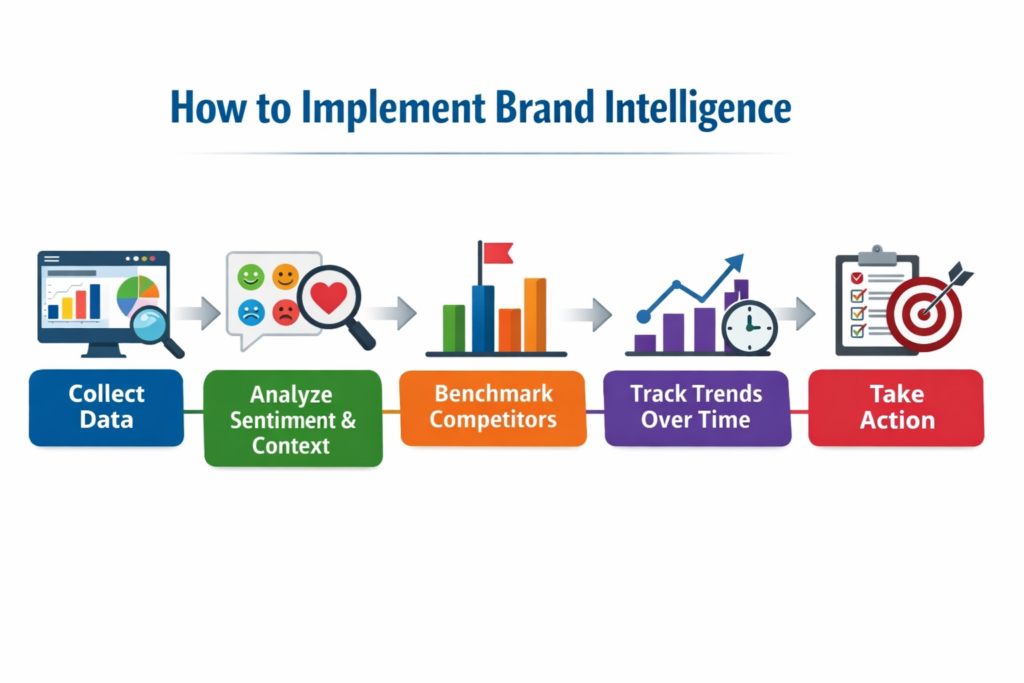
Practical Framework: How to Implement Brand Intelligence
By using this five-step framework, companies can bring their brand intelligence to life:
Collect Data
Collect data from social media, reviews, news articles, and forums.
Analyze Sentiment and Context
Analyze sentiment using Natural Language Processing (NLP) models such as GPT-based systems, transformer models, and proprietary sentiment engines to detect emotions, intent, and context behind conversations.
Benchmark Against Competitors
Compare your performance measures against other companies’ performance measures.
Track Trends Over Time
Look for patterns, spikes, and new stories over time.
Take Action
Make changes to campaigns, modify your products, and respond to your customers’ comments.
Using this methodical process will help ensure that companies can translate brand intelligence into action insights.
To effectively track offline brand intelligence, businesses integrate:
- Call analytics tools that convert voice interactions into text
- CRM systems capturing sales and support feedback
- In-store and POS feedback systems
- Surveys and Net Promoter Score (NPS) tools
This ensures a unified view of both digital and offline brand perception.
Key Factors to Measure Brand Intelligence
| Factors | Description | Example Value |
| Sentiment Score | Overall positive vs negative perception | 75% Positive |
| Share of Voice | Brand mentions vs competitors | 32% |
| Engagement Rate | Interaction with brand content | 4.5% |
| Brand Mentions | Total mentions across channels | 12000/month |
| Response Time | Time taken to respond to feedback | 2 hours |
Tracking these important factors helps businesses quantify brand perception and measure improvement over time.
Real-Time Use Cases of Brand Intelligence
Real-time brand intelligence examples will differ from one company’s strategic needs to another; however, they will invariably be used in real-time for the following data collection and tracking purposes:
Campaign Monitoring
Brands track sentiment during campaigns to measure audience reaction and optimize messaging in real time.
Crisis Management
Sudden spikes in negative sentiment help teams detect issues early and respond before they escalate.
Competitor Analysis
Brands compare:
- Sentiment trends
- Engagement levels
- Market positioning
Product Feedback Analysis
Customer conversations highlight product strengths and areas for improvement.
Scaling Brand Intelligence Across Teams
As a brand continues to grow, the complexity of managing its brand image will increase. To help alleviate the challenge brands face, new technology platforms like Brandnata allow you to centralize brand intelligence data points and create actionable insights for cross-department teams (i.e., marketing, pr, product).
At scale, brand intelligence will include:
- Real-time product dashboards
- Sentiment Analysis tracked with AI
- Alerts for Emerging Sentiment
- Comparison Benchmarks of Your Competitors
- Review of Long-Term Trend Data
Frequently Asked Questions
What is brand intelligence?
Brand intelligence is understanding how the crowd views a brand and discusses it based on information provided in social media, news, review services, and other online platforms.
What is the difference between brand intelligence and brand monitoring?
Brand monitoring is the simplest, as it refers to monitoring mentions, whereas brand intelligence goes to a deeper level by covering sentiment, situations, trends, and the position in the marketplace.
What is the significance of brand intelligence in businesses?
It assists businesses to safeguard their reputation, know their customers, make informed decisions, and also remain competitive in volatile markets.
Conclusion: Competitive Advantage out of Conversations
Brand intelligence has become a necessary component of modern brand management. Businesses can no longer rely on assumptions when brand perception is shaped in real time.
Because customers increasingly depend on online reviews and conversations, brands that actively use intelligence tools gain a competitive advantage in understanding perception and responding quickly. Studies show that 91% of consumers check online reviews before making a purchase, and nearly 88% trust online reviews as much as personal recommendations.
With the right tools and strategy, brand intelligence transforms conversations into insights and insights into action, helping businesses stay competitive, responsive, and in control of their narrative.

Leave a Reply