
Brands are evaluated on the spot with this fast-paced moving digital world. The perception of the whole society can be formed after one tweet, Reddit post, or viral Instagram post. This is why social media sentiment analysis tools have become imperative to the marketing, PR, and brand teams.
Research shows that over 70% of consumers (Gitnux, 2026) trust online reviews as much as personal recommendations, making sentiment analysis critical for brand perception and decision-making.
In 2026, monitoring has expanded beyond traditional platforms to include dark social channels such as WhatsApp, Discord, and Telegram – where private conversations often influence public perception indirectly.
The following list is a well-selected list of the best social media sentiment analysis tools with features, strengths, and a situation where they are most apt to assist you in selecting the correct option.
Why Sentiment Analysis Is Important
Social media conversations move fast, and brand perception can change instantly.
Sentiment analysis helps brands:
- Identify reputation risks early
- Understand customer emotions in real time
- Improve marketing campaigns
- Benchmark competitors
- Enhance customer experience
Businesses that actively monitor sentiment are more likely to detect risks early and respond faster, giving them a strong competitive advantage in fast-moving digital markets.
What Are the Best Social Media Sentiment Analysis Tools?
The best social media sentiment analysis tools in 2026 include Brandwatch for enterprise analytics, Sprout Social for integrated management, and Brandnata for narrative-driven intelligence.
These platforms rely on LLM-based sentiment analysis powered by systems such as OpenAI (GPT-4o/5) and Anthropic (Claude 3.5). They combine natural language processing (NLP), emotional AI, vector databases, and retrieval-augmented generation (RAG) to interpret tone, context, and intent across digital conversations.
Comparison of the Best Social Media Sentiment Analysis Tools (2026)
| Tool | Best For | Key Features | Pricing (USD) | Ideal Team Size |
| Brandwatch | Enterprise analytics | Advanced dashboards, segmentation | Custom / Quote-based | Enterprise |
| Talkwalker | Global monitoring | Image + text AI recognition | Custom / Quote-based | Enterprise |
| Sprout Social | Social + sentiment | Unified inbox, scheduling | $2988–$5988 | SMB–Mid |
| Brandnata | AI brand intelligence | Narrative + sentiment insights | Custom / Quote-based | Growing–Enterprise |
| Meltwater | PR + media tracking | News + social analytics | Custom / Quote-based | Enterprise |
| Hootsuite Insights | Integrated tracking | Social + sentiment dashboard | $1188–$8868 | SMB |
| Mention | Real-time alerts | Fast monitoring, alerts | $492–$2148 | Startups |
| Awario | Budget monitoring | Boolean search, competitor tracking | $468–$3588 | Small teams |
| Lexalytics | Custom NLP | API-based sentiment analysis | Custom / Quote-based | Developers |
Brandwatch
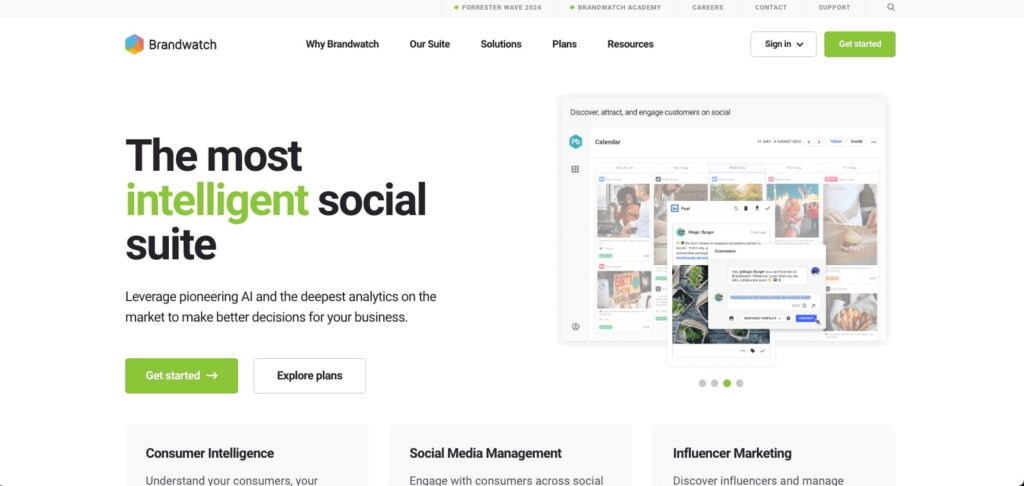
Brandwatch is a social listening and advanced analytics platform. It is good at handling large volumes of data, but cannot analyze the sentiment trends by region and demographics.
Best for: Large organizations handling massive conversation volumes
Pricing: Pricing is custom / quote-based
Key Features:
- Advanced analytics dashboards
- Audience segmentation
- Influencer identification
Pros:
- Highly customizable dashboards
- Strong data visualization
- Deep insights across regions
Cons:
- Expensive for smaller teams
- Steep learning curve
Talkwalker
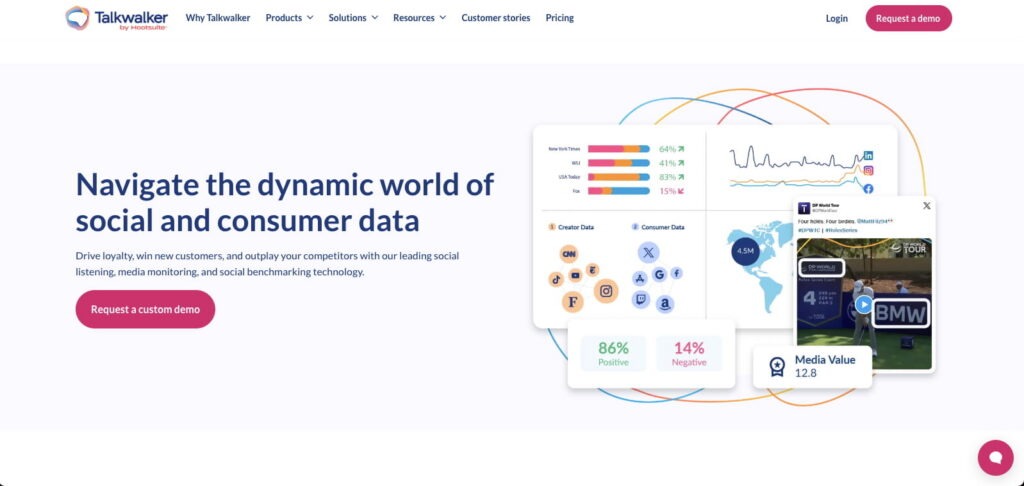
Talkwalker has powerful AI-related features, such as image recognition and multilingual sentiment analysis. This is helpful for brands that are operating in various markets.
Best for: Global brands with multimedia monitoring needs
Pricing: Custom pricing based on the requirements
Key Features:
- Image recognition AI
- Multilingual sentiment analysis
- Cross-channel data integration
Pros:
- Strong global coverage
- Visual logo detection
- Accurate multilingual analysis
Cons:
- High pricing
- Complex setup
Sprout Social
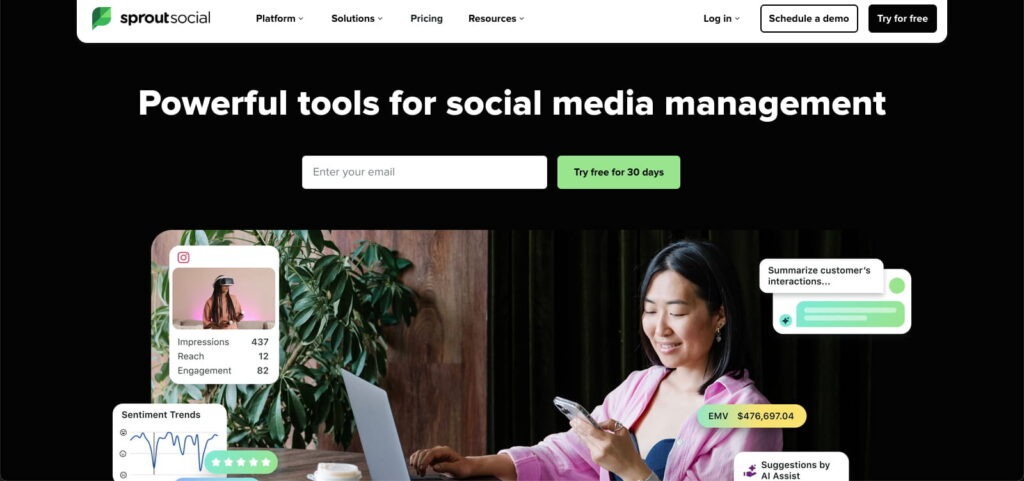
Sprout Social is able to combine publishing, engagement, and sentiment analysis on a single dashboard. It is simple and suited to the marketing teams that would like monitoring and scheduling to be found in the same tool.
Best for: Teams needing social media management + sentiment
Pricing: Starts from $2988 for standard to $5988 for advanced annually
Key Features:
- Unified social inbox
- Scheduling + publishing
- Built-in sentiment tracking
Pros:
- Easy to use
- Combines engagement + analytics
- Ideal for marketing teams
Cons:
- Limited deep sentiment insights
- Pricing increases with users
Brandnata
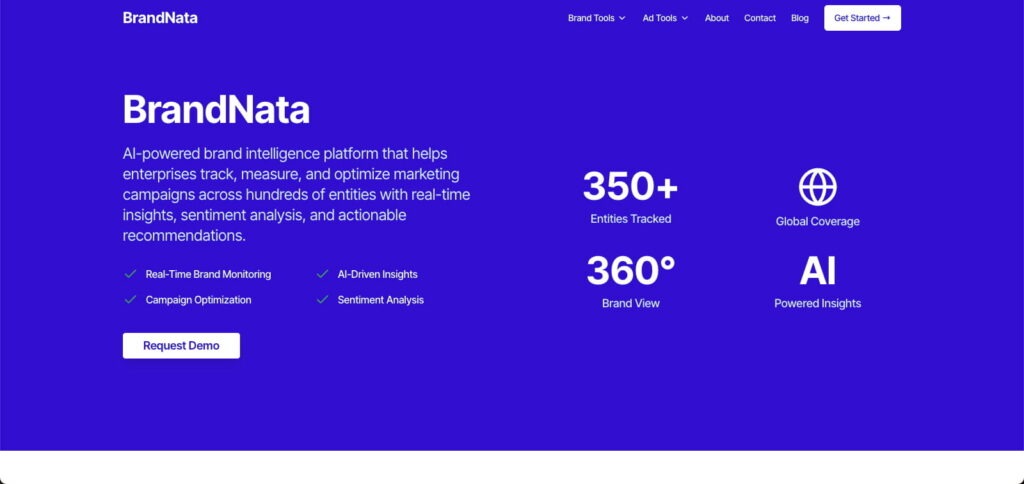
Brandnata is unique in its ability to integrate social listening and insightful brand knowledge. It does not simply identify some conversations as positive or negative but goes through and analyzes narratives, perception changes, competitor positioning, and new risks on the various platforms.
Best for: AI-powered brand intelligence and strategic insights
Pricing: Custom pricing for advanced features
Key Features:
- AI-driven sentiment and contextual analysis
- Narrative and perception tracking
- Competitive benchmarking
- Real-time sentiment spike alerts
- Multi-channel monitoring
Pros:
- Goes beyond basic sentiment tracking
- Provides narrative-level insights
- Strong competitor analysis
- Real-time actionable alerts
Cons:
- May require onboarding for advanced features
- Not as widely known as legacy tools (yet)
Brandnata places additional emphasis on understanding why sentiment shifts occur, rather than only categorizing mentions, which can be useful for teams focused on strategy and long-term positioning.
Meltwater
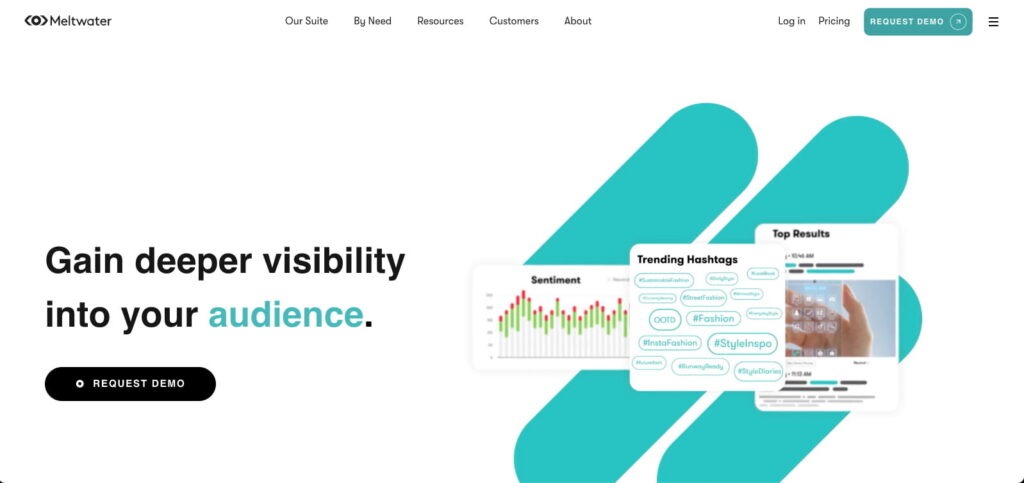
Meltwater is a mixture of social sentiment and news monitoring, which means it is appropriate for the communications teams working with reputation management.
Best for: PR and media intelligence
Pricing: Custom and quote-based pricing
Key Features:
- News + social monitoring
- PR analytics
- Media tracking
Pros:
- Strong for PR teams
- Combines news + social data
- Reputation monitoring
Cons:
- Expensive
- Less focused on deep social insights
Hootsuite Insights
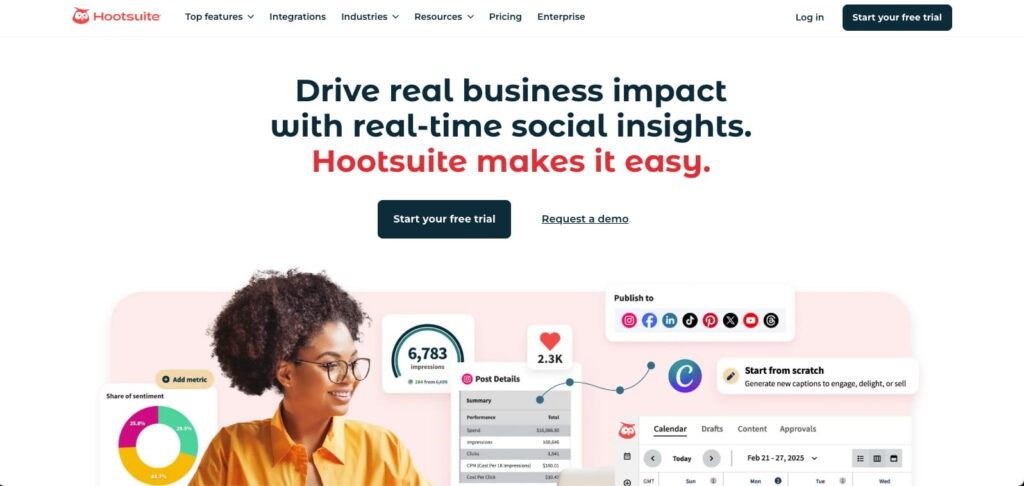
Hootsuite Insights is a new feature that, in addition to the popular social media management tool, Hootsuite will provide listening and sentiment tracking capabilities.
Best for: Teams already using Hootsuite
Pricing: Starts from $1188 to $8868 annually
Key Features:
- Integrated dashboard
- Social listening
- Sentiment tracking
Pros:
- Easy integration
- Familiar interface
- Good for SMBs
Cons:
- Limited advanced analytics
- Not ideal for deep insights
Mention
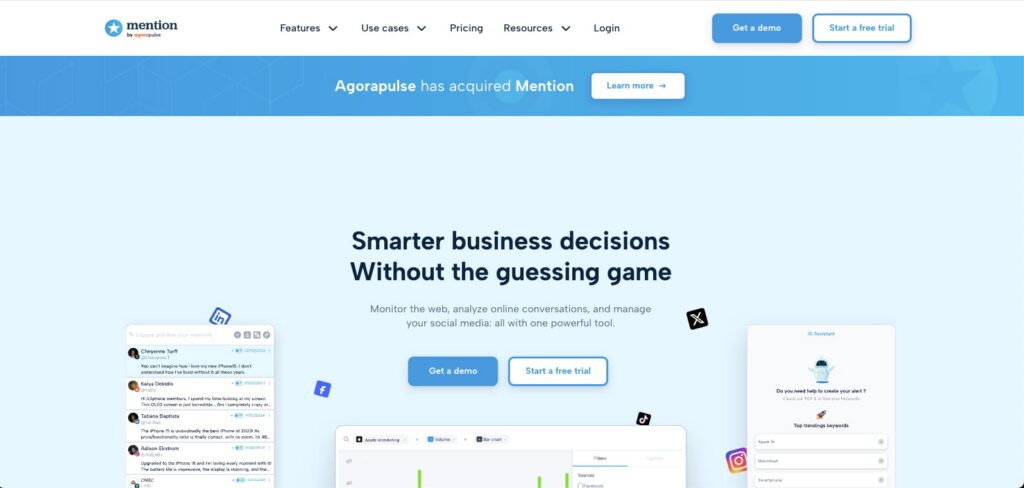
Mention is not complex and is devoted to real-time monitoring. It is handy in cases of startups that do not require heavy analytics but just a snapshot.
Best for: Real-time alerts and small teams
Pricing: Starts from $492 to $2148 anually for advanced insights
Key Features:
- Real-time monitoring
- Instant alerts
- Simple dashboard
Pros:
- Fast setup
- Affordable
- Great for startups
Cons:
- Limited analytics depth
- Basic sentiment analysis
Awario
Awario is a competitive monitoring and powerful Boolean search with a lower price tag.
Best for: Budget-friendly monitoring
Pricing: Starts from $468 to $3588 annually
Key Features:
- Boolean search
- Competitor tracking
- Social listening
Pros:
- Cost-effective
- Flexible search queries
- Good competitor tracking
Cons:
- Basic UI
- Limited AI capabilities
Lexalytics
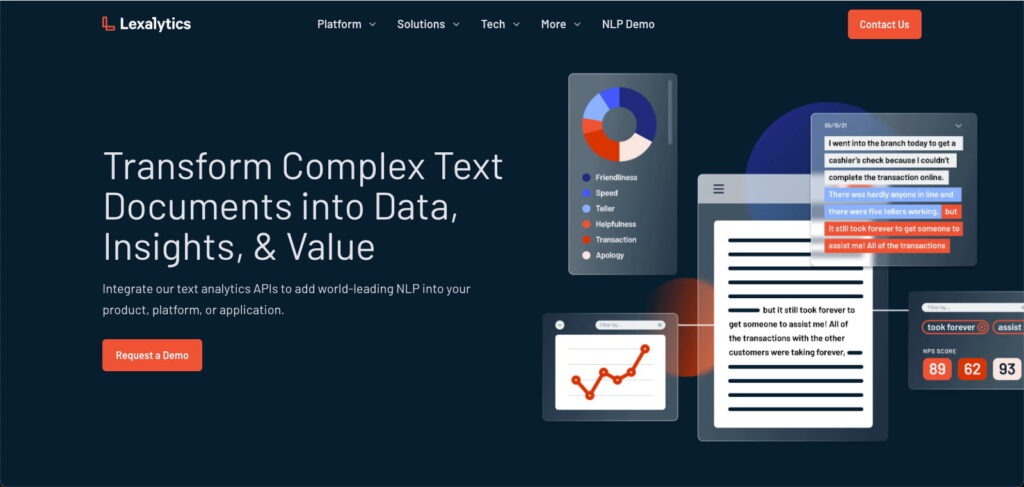
Lexalytics is an NLP and sentiment analysis model that is customizable and can integrate with internal systems.
Best for: Developers and custom integrations
Pricing: Starts at $11988+ annually
Key Features:
- NLP API
- Custom sentiment models
- Text analytics engine
Pros:
- Highly customizable
- Powerful NLP capabilities
- Enterprise-ready
Cons:
- Requires technical expertise
- Not plug-and-play
How to Choose the Right Sentiment Analysis Tool
When selecting a tool, brands should evaluate:
- Sentiment accuracy (including sarcasm detection)
- Multi-platform coverage
- Real-time alert capabilities
- Competitor benchmarking features
- Scalability for future growth
- Integration with existing tools
Tools that combine sentiment analysis with contextual intelligence and AI-driven insights tend to provide more long-term strategic value.
Frequently Asked Questions
What does a social media sentiment analysis tool mean?
It is an analysis software that interprets social media discussions to find out whether the mentions are positive, negative, or neutral. High-tech services also measure the context, emotion and trends.
What is the level of accuracy of AI sentiment analysis?
The tool and the level of its AI model is what determines the accuracy. Contextual models and natural language processing models are used to enhance precision in enterprise grade platforms.
Can sentiment analysis detect sarcasm?
Basic tools may struggle with sarcasm. Advanced AI-driven platforms use contextual learning to improve detection, but may not be perfect.
Is sentiment analysis only for large enterprises?
No. Enterprise tools have more in-depth analytics, but affordable ones can be found when dealing with a startup or a small business.
What is the frequency of brand sentiment monitoring?
Preferably, sentiment must be observed at all times. The real-time alerts will enable the brands to react to the large-scale issues.
Final Takeaway
The sentiment analysis tools of social media are not being considered as an option anymore; they are the keystone to brand management in the present day. Be it a new business tracking initial responses or an international company taking care of a reputation on a major scale, a difference will be quantified by the right platform selection.
To move beyond basic monitoring and truly understand perception shifts, competitive positioning, and evolving brand narratives, investing in an advanced solution like Brandnata can transform how businesses make strategic decisions.
Understanding what people say is important – but understanding what it means for your brand’s future is what truly drives growth.

Leave a Reply